What is here
The sura in full, a touchable mirror of its movements, and the five daily prayers that return a reciter to it.
 STARTQURANالقرآن الكريم
Collection 01Voice
الفاتحة
Seven movements around a grammatical turn: praise spoken about God becomes direct address, then petition.
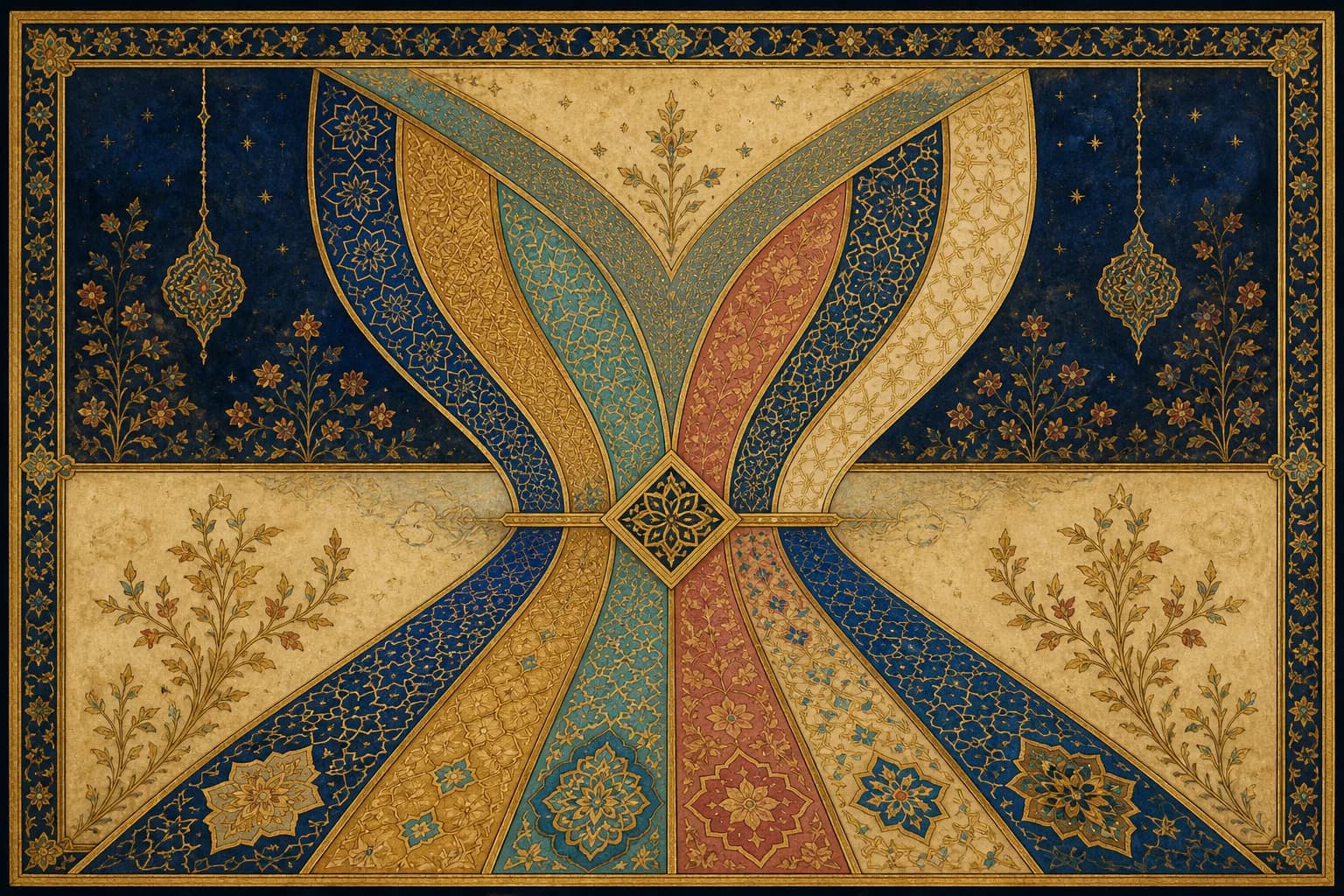
Voice · seven movements, one turn
The sura in full, a touchable mirror of its movements, and the five daily prayers that return a reciter to it.
Touch one movement and read its proposed counterpart. Then listen for the irreversible turn from He to You.
The grammatical turn is in the text. The three outward pairings are this page’s arrangement, offered for reflection.
03 · The reading instrument
The first movements speak about God: Lord of the worlds, the Merciful, Sovereign of the Day of Judgment.
‘You alone we worship; You alone we ask for help’ changes the grammar and the reciter’s posture at once.
The voice does not return to distance. It asks directly for guidance and names the path by its human consequences.
بِسْمِ ٱللَّهِ ٱلرَّحْمَٰنِ ٱلرَّحِيمِ
In the name of Allah, the Entirely Merciful, the Especially Merciful.
Hover or tap any movement. Each lights together with its mirror across the hinge; the axis itself belongs to both halves, worship offered upward, help asked downward.
Through the third movement the sura speaks of God in the third person. At the axis, its grammar turns to direct address—You and we—and does not turn back. Classical commentary has long discussed the division between praise and petition.
The outward pairs I–VII, II–VI, and III–V are this instrument’s arrangement, not a transmitted structure. Two verse numberings are transmitted for Al-Fatiha; the turn remains present under either count.
obligatory prayer units before any voluntary prayer is added