What is here
The Names, Ayat al-Kursi, Al-Fatiha, and the Verse of Light—each kept distinct rather than forced into one template.
 STARTQURANالقرآن الكريم
Collection 01Passages as instruments
كنوز القرآن
Four passages and traditions carried whole in Muslim memory, each opened through a different visual reading instrument.
Four ways of noticing
The Names, Ayat al-Kursi, Al-Fatiha, and the Verse of Light—each kept distinct rather than forced into one template.
Choose the passage you already carry, or the visual question that interests you: names, ring, grammatical turn, or nested image.
Every instrument distinguishes the verse or transmitted tradition from this site’s visual arrangement and editorial interpretation.
Four passages · four questions
These are not four themed illustrations. Each instrument isolates one feature worth noticing—invocation, structure, voice, or image—then lets the passage set the pace.
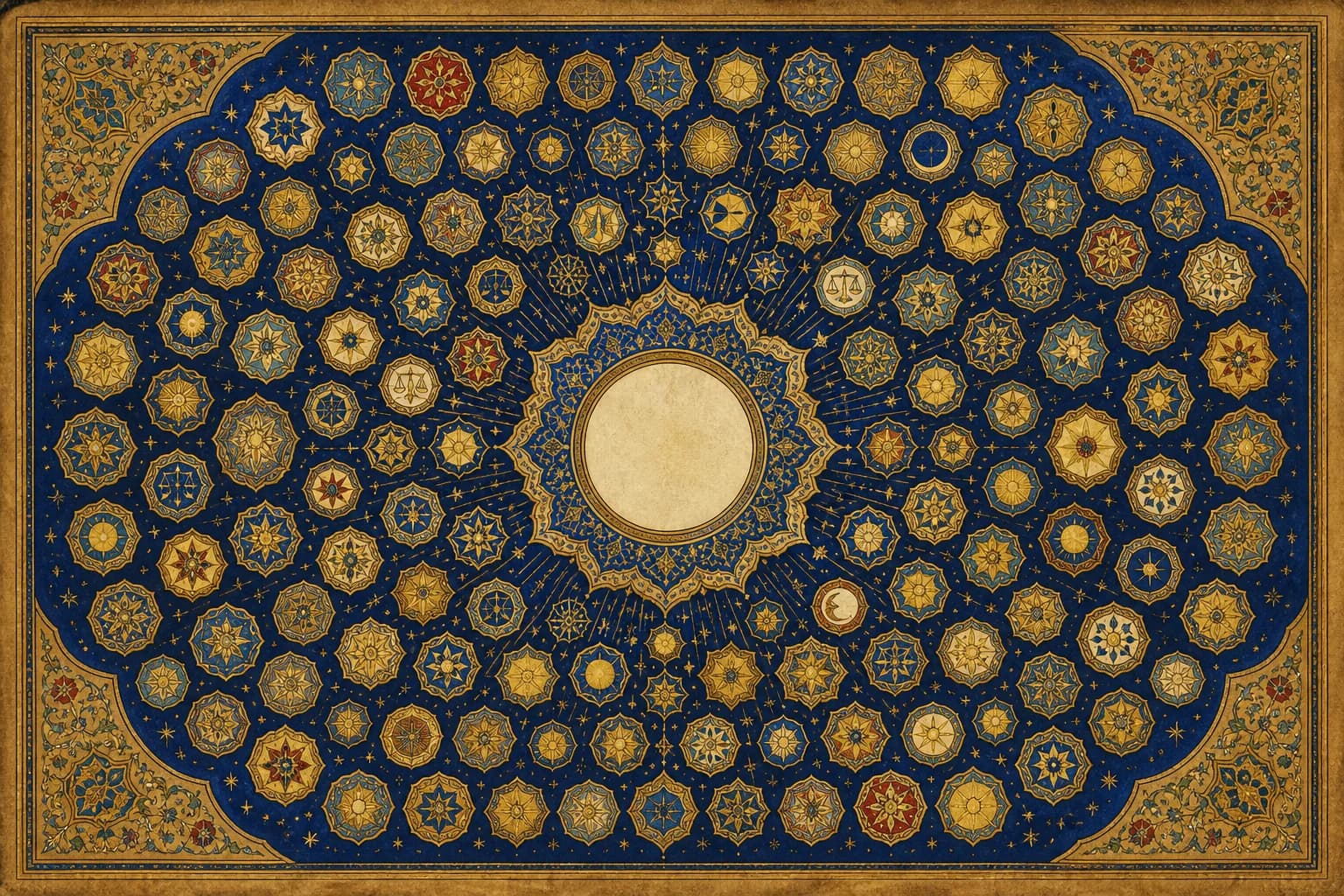
How does a name become an action?
A living mandala in which each transmitted name receives a motion and form shaped by its meaning.
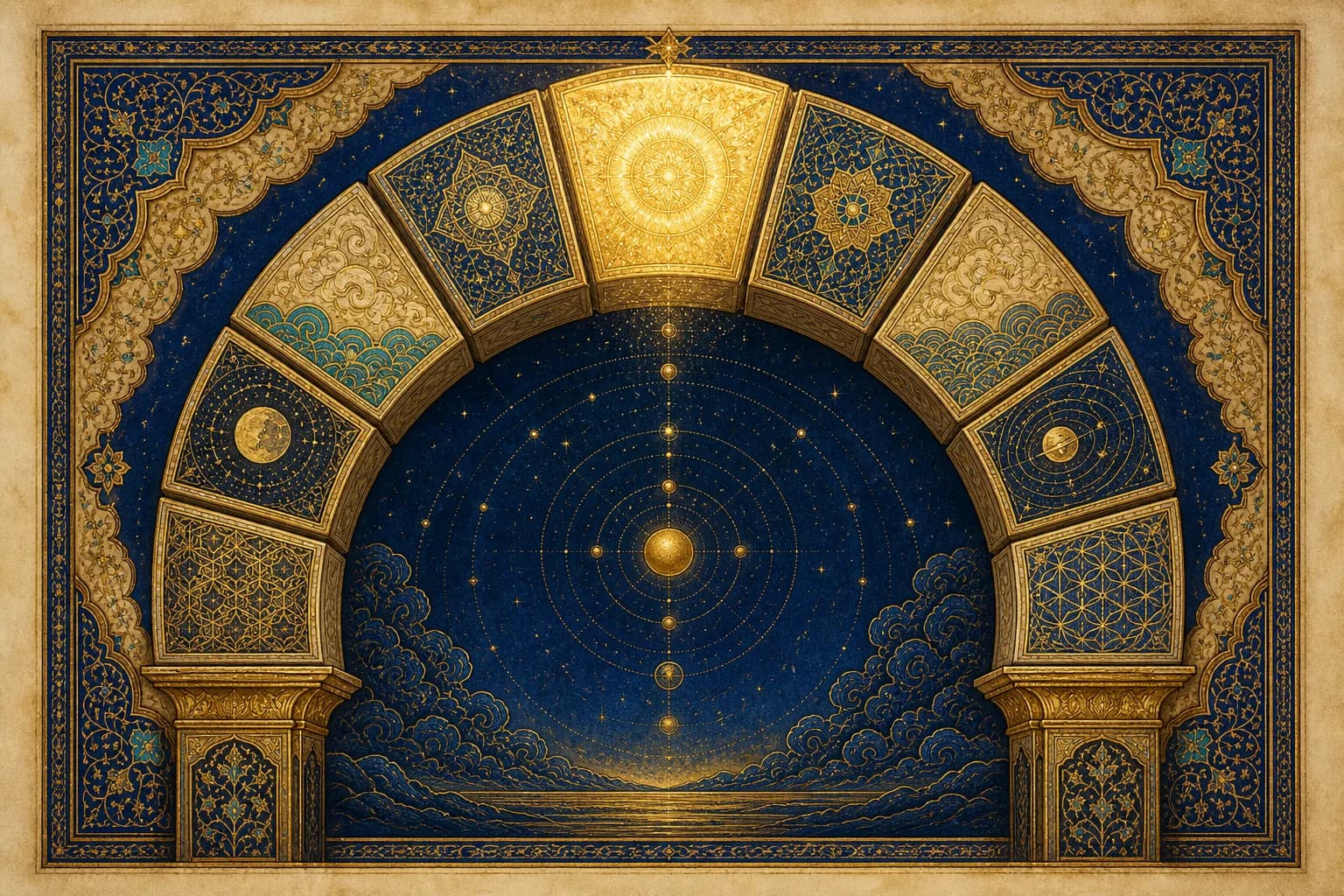
How does one verse hold its architecture?
Nine clauses arranged as an arch. Touch one stone and its proposed counterpart answers across the span.
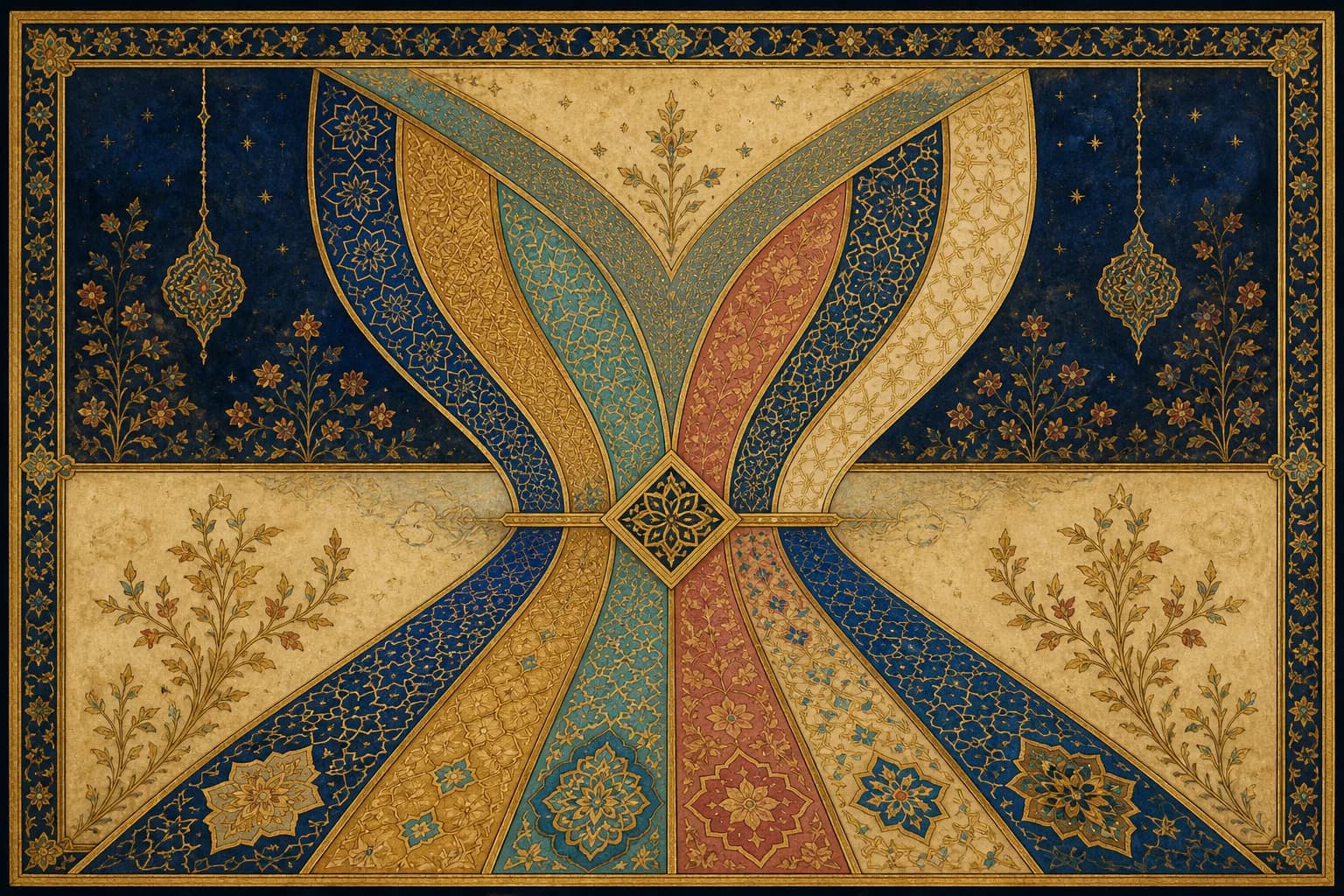
Where does description become address?
Seven movements around a grammatical hinge: the reciter turns from speaking about God to speaking to God.
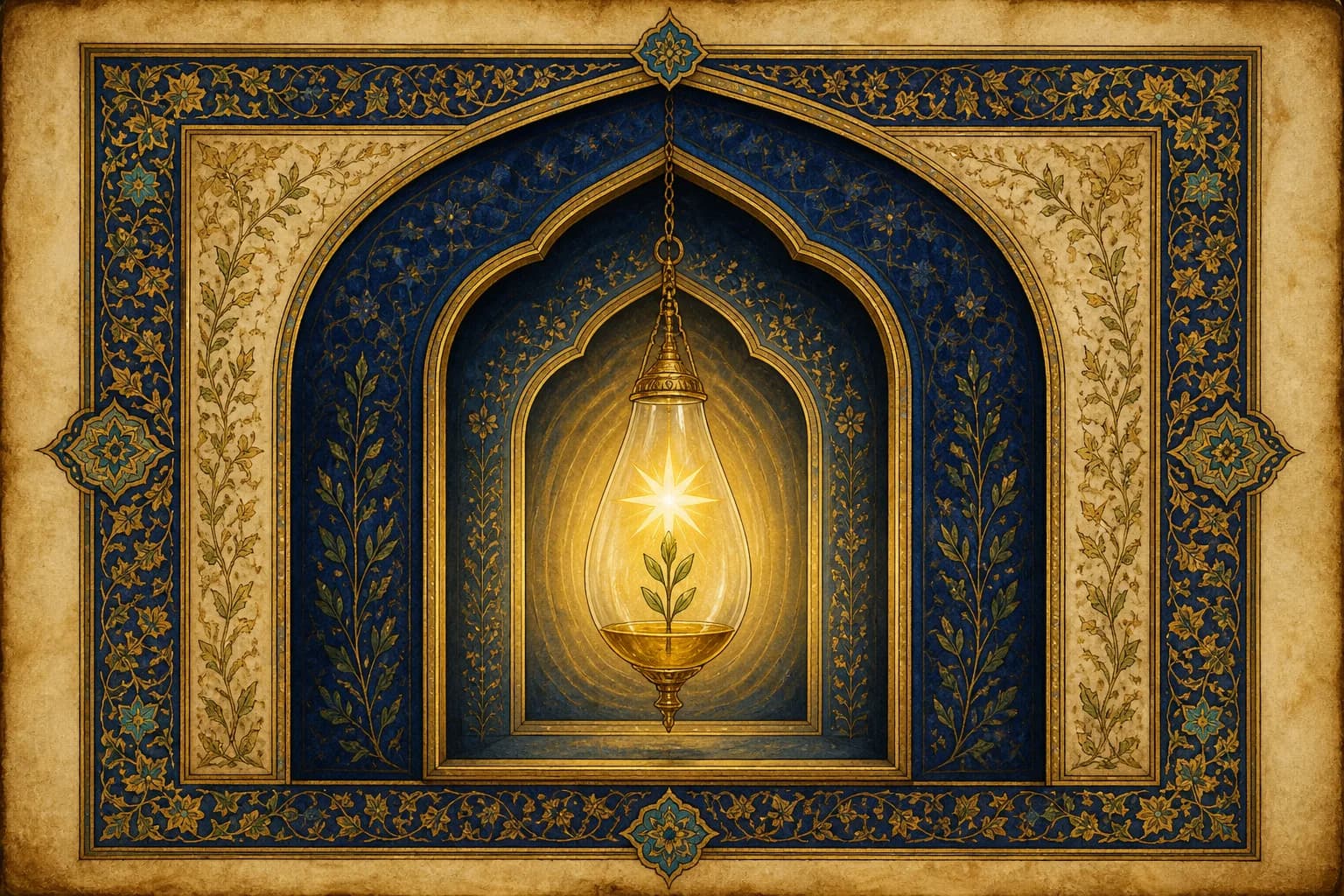
How does an image unfold inside an image?
Niche, lamp, glass, star, tree, oil: descend through the verse’s nested vessels one layer at a time.
One collection · four disciplines
Let meaning shape motion, then check where the word-form appears.
Hold two parts of a verse together without losing the verse as a whole.
Hear grammar cross from description into direct address and petition.
Move through each vessel in sequence, then return to the uninterrupted verse.