Collection 04Reading from where you stand

Ways into the Quran

أبواب إلى القرآن

Four visual, source-led reading paths for visitors arriving from Christianity, Judaism, another spiritual path, or no religion.

4starting positions

Doors

01 · holds

What is here

A first ten-minute route, questions visitors actually carry, and sourced points of recognition and real difference.

02 · begins

How to enter

Choose the question closest to your own. Begin with three short readings, then open only the deeper comparison you need.

03 · promises

The boundary

These pages explain what the Quran says. They do not define another tradition or worldview on a visitor’s behalf.

Choose your actual starting place

This is not a belief quiz. It is a reading orientation.

Start with the vocabulary you already carry. Then let the Quran state what it recognises, what it changes, and what it asks—without forcing four different visitors through one generic introduction.

  1. 01RecogniseBegin on familiar ground.
  2. 02DistinguishName the Quran’s own position.
  3. 03ReadOpen the verses, not only our summary.

Four thresholds

Which question sounds most like yours?

A blue geometric arcade opens into a sunlit palm garden, with an unlettered scroll and olive branch at the threshold.01
You know Mary, Jesus, revelation, sin, and salvation—and want the Quran to speak in its own terms.

3 lenses · 15 sourced questions

From Christianity

أهل الإنجيل

The Quran calls Jesus the Messiah and Maryam chosen and purified. It also states its differences about divinity, crucifixion, revelation, and forgiveness.

You may be asking
  • What does the Quran affirm about Maryam, the Messiah, and his miracles?
  • Where does it differ on divinity, the cross, scripture, and forgiveness?
  1. RecognitionMeet Maryam in her own sura
  2. ClaimHear how the Quran names Isa
  3. DifferenceRead the boundary without paraphrase
Open this path
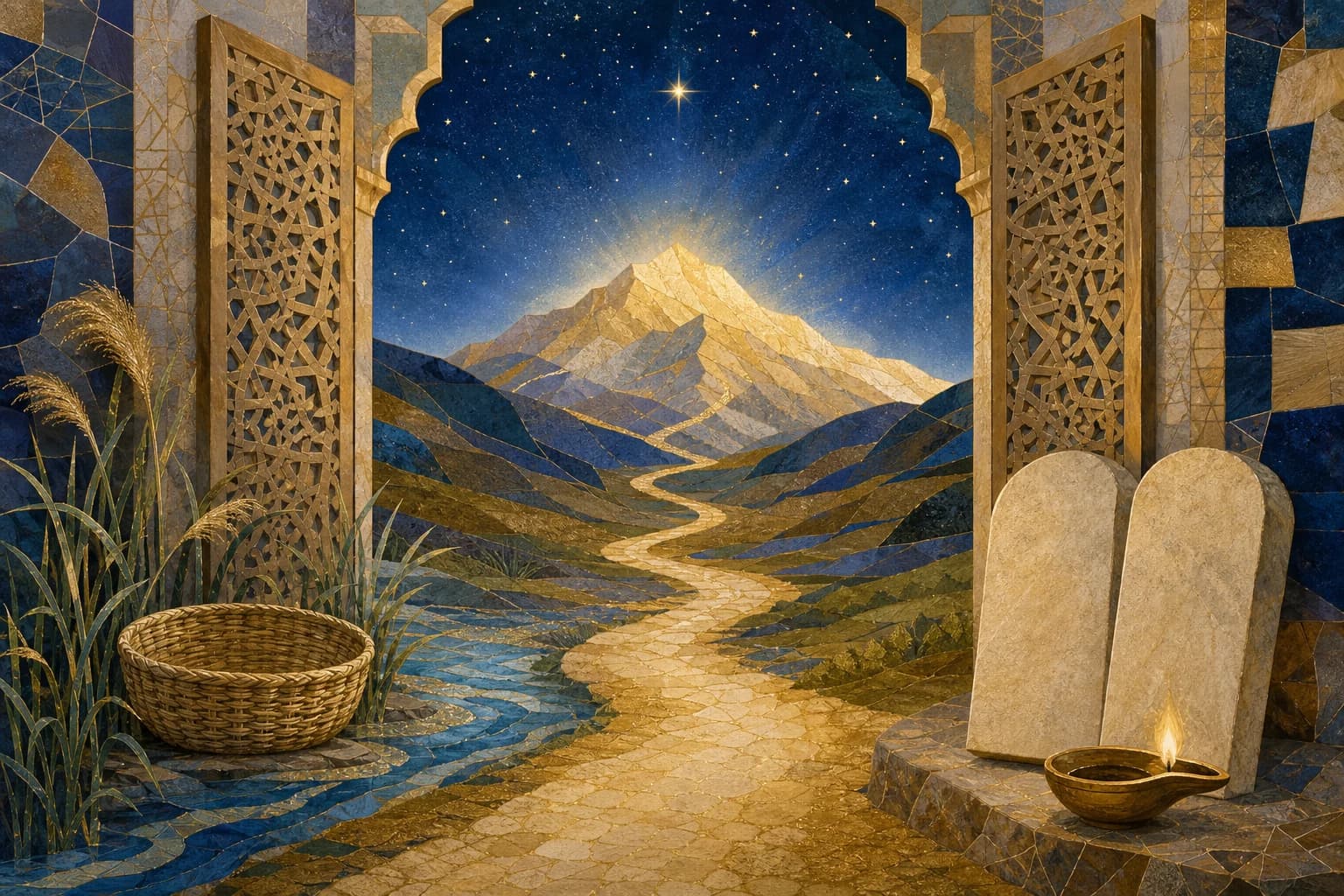
An empty woven basket rests among river reeds beside plain stone tablets, while a golden path climbs toward a radiant mountain.02
You know Musa, the Torah, covenant, Exodus, and the Children of Israel—and want to see how the Quran retells that memory.

3 lenses · 15 sourced questions

From Judaism

بنو إسرائيل

The Quran returns again and again to Musa: the basket still rides the river, the sea still parts, and the Children of Israel are addressed by name.

You may be asking
  • Which scenes and covenants will a reader of the Tanakh recognise?
  • Where do the Quranic accounts take a different prophetic or scriptural position?
  1. RecognitionBegin with Musa’s first call
  2. MemoryHear the address to Israel
  3. DifferenceRead the Quran on earlier scripture
Open this path
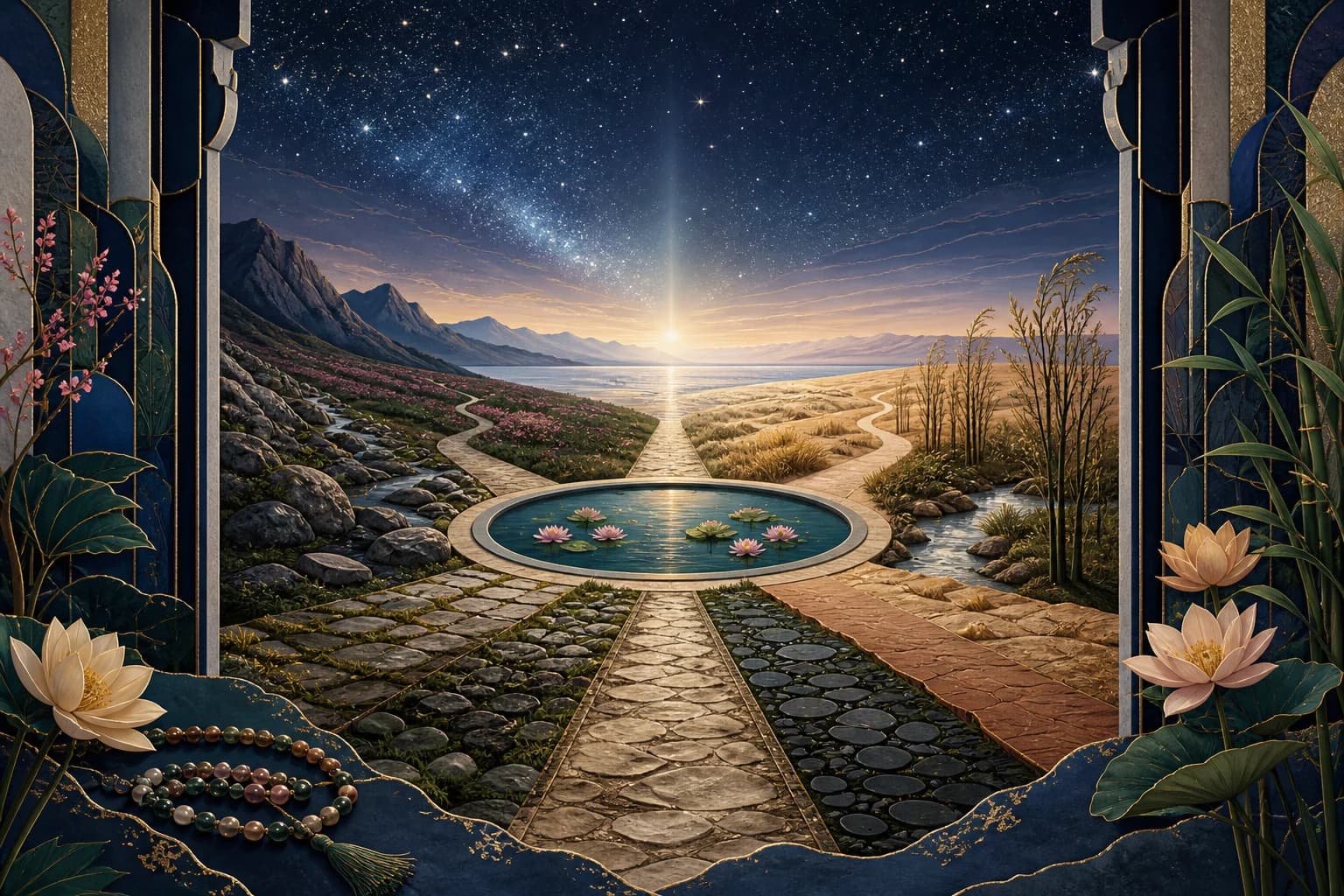
Distinct mountain, garden, stone, and desert paths meet at a calm pool beneath one immense star-filled sky.03
Your tradition is not directly named here, and you want recognition without being flattened into a generic spirituality.

3 lenses · 11 sourced questions

From Another Path

الأمم

The Quran says a messenger was sent to every people on earth, and that most of them it never names. If your path is not named here, it is not unaccounted for.

You may be asking
  • What room does the Quran leave for messengers and peoples it never names?
  • Where do remembrance and self-discipline resonate—and where does Quranic oneness part company?
  1. RecognitionBegin with unnamed messengers
  2. PracticeRead signs outside and within
  3. DifferenceMeet uncompromised oneness
Open this path
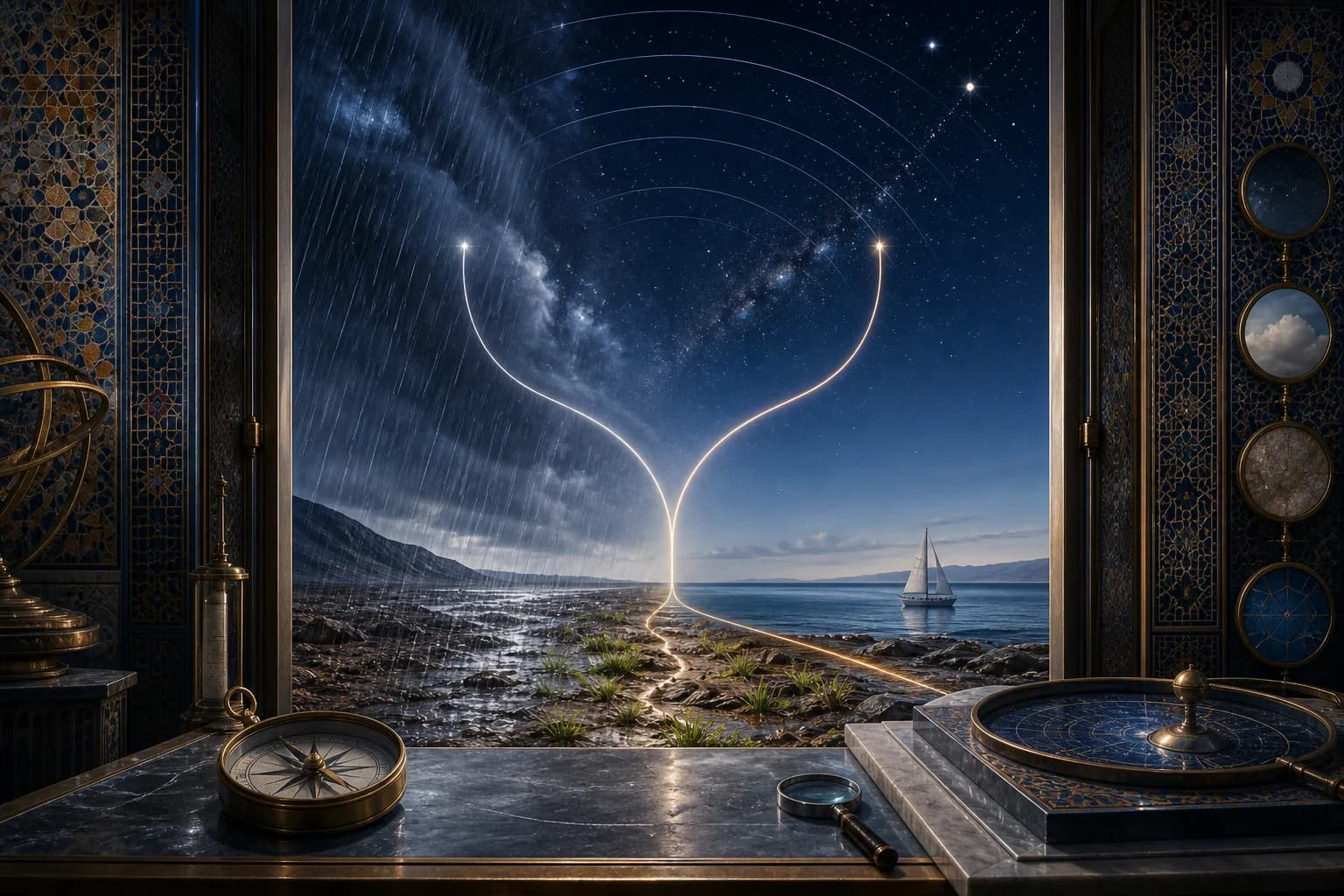
An observatory-like threshold frames stars, rain, new growth, and a riderless sailboat, with a compass and lens on an evidence table.04
You do not grant scripture authority in advance; you want to inspect its questions, evidence, and limits before belief.

3 lenses · 13 sourced questions

Without Religion

الناس

A scripture that quotes its skeptics in their own words, demands proof of claims, and rests its case on rain, ships, and the alternation of night and day.

You may be asking
  • Does the Quran invite examination—or merely demand agreement?
  • What kind of inference takes it from the visible world to Creator, judgment, and the unseen?
  1. EvidenceStart with the observable world
  2. QuestionTake the creation challenge directly
  3. LimitSee where inference becomes trust
Open this path
Continue through Collections

Each collection changes the form while keeping the source and its limits visible.

Next · 05Kid Stories