What is here
3 constellations, each separating shared ground from a point where the Quran’s account differs.
 STARTQURANالقرآن الكريم
Collection 04A door, standing open
بنو إسرائيل
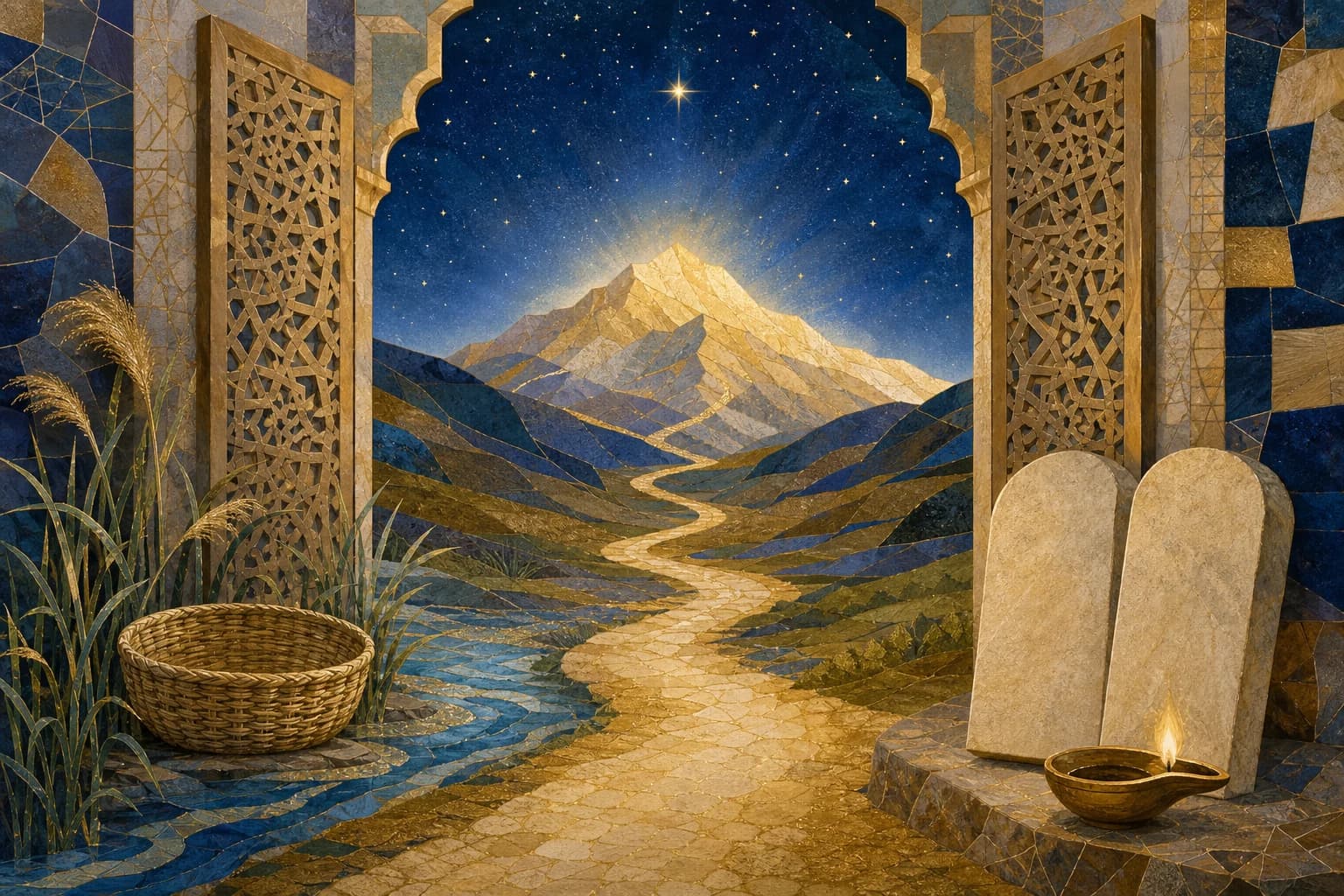
The basket on the water, the fire at the mountain, Pharaoh, the sea, Sinai, and the tablets: the Quran returns to Musa’s story in sura after sura. It addresses the Children of Israel directly, remembering favor and covenant. This path opens on that shared vocabulary, then states plainly where the Quran tells or frames the account differently.
Doors
3 constellations, each separating shared ground from a point where the Quran’s account differs.
Use the overview below. Open only the constellation that matters to your question, then read every cited verse in context.
The shared/different labels describe this editorial comparison. The Quranic words are sourced; descriptions of another tradition require its own sources.
You know Musa, the Torah, covenant, Exodus, and the Children of Israel—and want to see how the Quran retells that memory.
First 10 minutes
Read these before the comparisons. They establish recognition, the Quran’s own claim, and one honest point of difference.
The fire, the sacred valley, the removed sandals, and direct speech.
Favor remembered, Pharaoh, deliverance, and the divided sea.
Torah as guidance and light; Quran as confirmation and guardian.
Go deeper
01 · Constellation
the infant set on the river by his mother's inspired heart, to be returned to her.
وَأَوْحَيْنَآ إِلَىٰٓ أُمِّ مُوسَىٰٓ أَنْ أَرْضِعِيهِ فَإِذَا خِفْتِ عَلَيْهِ فَأَلْقِيهِ فِى ٱلْيَمِّ وَلَا تَخَافِى وَلَا تَحْزَنِىٓ إِنَّا رَآدُّوهُ إِلَيْكِ وَجَاعِلُوهُ مِنَ ٱلْمُرْسَلِينَ
And We inspired to the mother of Moses, "Suckle him; but when you fear for him, cast him into the river and do not fear and do not grieve. Indeed, We will return him to you and will make him [one] of the messengers."
فَرَدَدْنَٰهُ إِلَىٰٓ أُمِّهِۦ كَىْ تَقَرَّ عَيْنُهَا وَلَا تَحْزَنَ وَلِتَعْلَمَ أَنَّ وَعْدَ ٱللَّهِ حَقٌّ وَلَٰكِنَّ أَكْثَرَهُمْ لَا يَعْلَمُونَ
So We restored him to his mother that she might be content and not grieve and that she would know that the promise of Allah is true. But most of the people do not know.
the sacred valley, the sandals removed, and speech without an intermediary.
فَلَمَّآ أَتَىٰهَا نُودِىَ يَٰمُوسَىٰٓ
And when he came to it, he was called, "O Moses,
إِنِّىٓ أَنَا۠ رَبُّكَ فَٱخْلَعْ نَعْلَيْكَ إِنَّكَ بِٱلْوَادِ ٱلْمُقَدَّسِ طُوًى
Indeed, I am your Lord, so remove your sandals. Indeed, you are in the sacred valley of Tuwa.
وَرُسُلًا قَدْ قَصَصْنَٰهُمْ عَلَيْكَ مِن قَبْلُ وَرُسُلًا لَّمْ نَقْصُصْهُمْ عَلَيْكَ وَكَلَّمَ ٱللَّهُ مُوسَىٰ تَكْلِيمًا
And [We sent] messengers about whom We have related [their stories] to you before and messengers about whom We have not related to you. And Allah spoke to Moses with [direct] speech.
struck with the staff, each side like a towering mountain.
فَأَوْحَيْنَآ إِلَىٰ مُوسَىٰٓ أَنِ ٱضْرِب بِّعَصَاكَ ٱلْبَحْرَ فَٱنفَلَقَ فَكَانَ كُلُّ فِرْقٍ كَٱلطَّوْدِ ٱلْعَظِيمِ
Then We inspired to Moses, "Strike with your staff the sea," and it parted, and each portion was like a great towering mountain.
the appointed meeting, and tablets written with instruction concerning all things.
وَكَتَبْنَا لَهُۥ فِى ٱلْأَلْوَاحِ مِن كُلِّ شَىْءٍ مَّوْعِظَةً وَتَفْصِيلًا لِّكُلِّ شَىْءٍ فَخُذْهَا بِقُوَّةٍ وَأْمُرْ قَوْمَكَ يَأْخُذُوا۟ بِأَحْسَنِهَا سَأُو۟رِيكُمْ دَارَ ٱلْفَٰسِقِينَ
And We wrote for him on the tablets [something] of all things - instruction and explanation for all things, [saying], "Take them with determination and order your people to take the best of it. I will show you the home of the defiantly disobedient."
in Exodus, Aaron fashions the golden calf. In the Quran, Aaron is a prophet who tried to stop its worship; the calf is the work of another man, called al-Samiri. Two tellings of one wilderness, differing over one brother's part in it.
قَالَ فَإِنَّا قَدْ فَتَنَّا قَوْمَكَ مِنۢ بَعْدِكَ وَأَضَلَّهُمُ ٱلسَّامِرِىُّ
[Allah] said, "But indeed, We have tried your people after you [departed], and the Samiri has led them astray."
وَلَقَدْ قَالَ لَهُمْ هَٰرُونُ مِن قَبْلُ يَٰقَوْمِ إِنَّمَا فُتِنتُم بِهِۦ وَإِنَّ رَبَّكُمُ ٱلرَّحْمَٰنُ فَٱتَّبِعُونِى وَأَطِيعُوٓا۟ أَمْرِى
And Aaron had already told them before [the return of Moses], "O my people, you are only being tested by it, and indeed, your Lord is the Most Merciful, so follow me and obey my order."
the Quran says its own prophet is written of in the Torah. If your Jewish reading recognises no such figure there, the disagreement is foundational and should not be softened into apparent agreement.
ٱلَّذِينَ يَتَّبِعُونَ ٱلرَّسُولَ ٱلنَّبِىَّ ٱلْأُمِّىَّ ٱلَّذِى يَجِدُونَهُۥ مَكْتُوبًا عِندَهُمْ فِى ٱلتَّوْرَىٰةِ وَٱلْإِنجِيلِ يَأْمُرُهُم بِٱلْمَعْرُوفِ وَيَنْهَىٰهُمْ عَنِ ٱلْمُنكَرِ وَيُحِلُّ لَهُمُ ٱلطَّيِّبَٰتِ وَيُحَرِّمُ عَلَيْهِمُ ٱلْخَبَٰٓئِثَ وَيَضَعُ عَنْهُمْ إِصْرَهُمْ وَٱلْأَغْلَٰلَ ٱلَّتِى كَانَتْ عَلَيْهِمْ فَٱلَّذِينَ ءَامَنُوا۟ بِهِۦ وَعَزَّرُوهُ وَنَصَرُوهُ وَٱتَّبَعُوا۟ ٱلنُّورَ ٱلَّذِىٓ أُنزِلَ مَعَهُۥٓ أُو۟لَٰٓئِكَ هُمُ ٱلْمُفْلِحُونَ
Those who follow the Messenger, the unlettered prophet, whom they find written in what they have of the Torah and the Gospel, who enjoins upon them what is right and forbids them what is wrong and makes lawful for them the good things and prohibits for them the evil and relieves them of their burden and the shackles which were upon them. So they who have believed in him, honored him, supported him and followed the light which was sent down with him - it is those who will be the successful.
02 · Constellation
the Quran's own description of the Torah, the same words it uses for the Gospel and for itself.
إِنَّآ أَنزَلْنَا ٱلتَّوْرَىٰةَ فِيهَا هُدًى وَنُورٌ يَحْكُمُ بِهَا ٱلنَّبِيُّونَ ٱلَّذِينَ أَسْلَمُوا۟ لِلَّذِينَ هَادُوا۟ وَٱلرَّبَّٰنِيُّونَ وَٱلْأَحْبَارُ بِمَا ٱسْتُحْفِظُوا۟ مِن كِتَٰبِ ٱللَّهِ وَكَانُوا۟ عَلَيْهِ شُهَدَآءَ فَلَا تَخْشَوُا۟ ٱلنَّاسَ وَٱخْشَوْنِ وَلَا تَشْتَرُوا۟ بِـَٔايَٰتِى ثَمَنًا قَلِيلًا وَمَن لَّمْ يَحْكُم بِمَآ أَنزَلَ ٱللَّهُ فَأُو۟لَٰٓئِكَ هُمُ ٱلْكَٰفِرُونَ
Indeed, We sent down the Torah, in which was guidance and light. The prophets who submitted [to Allah] judged by it for the Jews, as did the rabbis and scholars by that with which they were entrusted of the Scripture of Allah, and they were witnesses thereto. So do not fear the people but fear Me, and do not exchange My verses for a small price. And whoever does not judge by what Allah has revealed - then it is those who are the disbelievers.
the Quran teaches, as a decree written for the children of Israel, that taking one innocent life is like slaying all mankind, and saving one life like saving all of it. The Mishnah carries the same teaching in nearly the same words (Sanhedrin 4:5); the two books hold this sentence almost in common.
مِنْ أَجْلِ ذَٰلِكَ كَتَبْنَا عَلَىٰ بَنِىٓ إِسْرَٰٓءِيلَ أَنَّهُۥ مَن قَتَلَ نَفْسًۢا بِغَيْرِ نَفْسٍ أَوْ فَسَادٍ فِى ٱلْأَرْضِ فَكَأَنَّمَا قَتَلَ ٱلنَّاسَ جَمِيعًا وَمَنْ أَحْيَاهَا فَكَأَنَّمَآ أَحْيَا ٱلنَّاسَ جَمِيعًا وَلَقَدْ جَآءَتْهُمْ رُسُلُنَا بِٱلْبَيِّنَٰتِ ثُمَّ إِنَّ كَثِيرًا مِّنْهُم بَعْدَ ذَٰلِكَ فِى ٱلْأَرْضِ لَمُسْرِفُونَ
Because of that, We decreed upon the Children of Israel that whoever kills a soul unless for a soul or for corruption [done] in the land - it is as if he had slain mankind entirely. And whoever saves one - it is as if he had saved mankind entirely. And our messengers had certainly come to them with clear proofs. Then indeed many of them, [even] after that, throughout the land, were transgressors.
if you hold the Torah complete and the age of prophecy concluded, the Quran makes a later claim you will not share. It presents Muhammad as the seal of the prophets and itself as a guardian over earlier scriptures.
مَّا كَانَ مُحَمَّدٌ أَبَآ أَحَدٍ مِّن رِّجَالِكُمْ وَلَٰكِن رَّسُولَ ٱللَّهِ وَخَاتَمَ ٱلنَّبِيِّۦنَ وَكَانَ ٱللَّهُ بِكُلِّ شَىْءٍ عَلِيمًا
Muhammad is not the father of [any] one of your men, but [he is] the Messenger of Allah and last of the prophets. And ever is Allah, of all things, Knowing.
وَأَنزَلْنَآ إِلَيْكَ ٱلْكِتَٰبَ بِٱلْحَقِّ مُصَدِّقًا لِّمَا بَيْنَ يَدَيْهِ مِنَ ٱلْكِتَٰبِ وَمُهَيْمِنًا عَلَيْهِ فَٱحْكُم بَيْنَهُم بِمَآ أَنزَلَ ٱللَّهُ وَلَا تَتَّبِعْ أَهْوَآءَهُمْ عَمَّا جَآءَكَ مِنَ ٱلْحَقِّ لِكُلٍّ جَعَلْنَا مِنكُمْ شِرْعَةً وَمِنْهَاجًا وَلَوْ شَآءَ ٱللَّهُ لَجَعَلَكُمْ أُمَّةً وَٰحِدَةً وَلَٰكِن لِّيَبْلُوَكُمْ فِى مَآ ءَاتَىٰكُمْ فَٱسْتَبِقُوا۟ ٱلْخَيْرَٰتِ إِلَى ٱللَّهِ مَرْجِعُكُمْ جَمِيعًا فَيُنَبِّئُكُم بِمَا كُنتُمْ فِيهِ تَخْتَلِفُونَ
And We have revealed to you, [O Muhammad], the Book in truth, confirming that which preceded it of the Scripture and as a criterion over it. So judge between them by what Allah has revealed and do not follow their inclinations away from what has come to you of the truth. To each of you We prescribed a law and a method. Had Allah willed, He would have made you one nation [united in religion], but [He intended] to test you in what He has given you; so race to [all that is] good. To Allah is your return all together, and He will [then] inform you concerning that over which you used to differ.
the Quran holds that the Sabbath was appointed for the children of Israel. Islam was given no day of rest: only a congregation on Friday, after which work resumes. A shared reverence for sacred time, kept on different terms.
إِنَّمَا جُعِلَ ٱلسَّبْتُ عَلَى ٱلَّذِينَ ٱخْتَلَفُوا۟ فِيهِ وَإِنَّ رَبَّكَ لَيَحْكُمُ بَيْنَهُمْ يَوْمَ ٱلْقِيَٰمَةِ فِيمَا كَانُوا۟ فِيهِ يَخْتَلِفُونَ
The sabbath was only appointed for those who differed over it. And indeed, your Lord will judge between them on the Day of Resurrection concerning that over which they used to differ.
يَٰٓأَيُّهَا ٱلَّذِينَ ءَامَنُوٓا۟ إِذَا نُودِىَ لِلصَّلَوٰةِ مِن يَوْمِ ٱلْجُمُعَةِ فَٱسْعَوْا۟ إِلَىٰ ذِكْرِ ٱللَّهِ وَذَرُوا۟ ٱلْبَيْعَ ذَٰلِكُمْ خَيْرٌ لَّكُمْ إِن كُنتُمْ تَعْلَمُونَ
O you who have believed, when [the adhan] is called for the prayer on the day of Jumu'ah [Friday], then proceed to the remembrance of Allah and leave trade. That is better for you, if you only knew.
03 · Constellation
the address is direct, and the favor and the preference over the worlds are stated in the Quran's own voice.
يَٰبَنِىٓ إِسْرَٰٓءِيلَ ٱذْكُرُوا۟ نِعْمَتِىَ ٱلَّتِىٓ أَنْعَمْتُ عَلَيْكُمْ وَأَنِّى فَضَّلْتُكُمْ عَلَى ٱلْعَٰلَمِينَ
O Children of Israel, remember My favor that I have bestowed upon you and that I preferred you over the worlds.
the rescue from Pharaoh is retold as a favor never to be forgotten.
وَإِذْ نَجَّيْنَٰكُم مِّنْ ءَالِ فِرْعَوْنَ يَسُومُونَكُمْ سُوٓءَ ٱلْعَذَابِ يُذَبِّحُونَ أَبْنَآءَكُمْ وَيَسْتَحْيُونَ نِسَآءَكُمْ وَفِى ذَٰلِكُم بَلَآءٌ مِّن رَّبِّكُمْ عَظِيمٌ
And [recall] when We saved your forefathers from the people of Pharaoh, who afflicted you with the worst torment, slaughtering your [newborn] sons and keeping your females alive. And in that was a great trial from your Lord.
وَإِذْ فَرَقْنَا بِكُمُ ٱلْبَحْرَ فَأَنجَيْنَٰكُمْ وَأَغْرَقْنَآ ءَالَ فِرْعَوْنَ وَأَنتُمْ تَنظُرُونَ
And [recall] when We parted the sea for you and saved you and drowned the people of Pharaoh while you were looking on.
Abraham, Ishmael, Isaac, Jacob and the tribes, named together in the Muslim confession of faith, with no distinction made among them.
قُولُوٓا۟ ءَامَنَّا بِٱللَّهِ وَمَآ أُنزِلَ إِلَيْنَا وَمَآ أُنزِلَ إِلَىٰٓ إِبْرَٰهِۦمَ وَإِسْمَٰعِيلَ وَإِسْحَٰقَ وَيَعْقُوبَ وَٱلْأَسْبَاطِ وَمَآ أُوتِىَ مُوسَىٰ وَعِيسَىٰ وَمَآ أُوتِىَ ٱلنَّبِيُّونَ مِن رَّبِّهِمْ لَا نُفَرِّقُ بَيْنَ أَحَدٍ مِّنْهُمْ وَنَحْنُ لَهُۥ مُسْلِمُونَ
Say, [O believers], "We have believed in Allah and what has been revealed to us and what has been revealed to Abraham and Ishmael and Isaac and Jacob and the Descendants and what was given to Moses and Jesus and what was given to the prophets from their Lord. We make no distinction between any of them, and we are Muslims [in submission] to Him."
if you trace covenantal history through Isaac, notice that the Quran honors Isaac and Jacob as prophets while also giving Ishmael prophethood and a work of his own: raising the foundations of the House at Mecca beside Abraham.
وَإِذْ يَرْفَعُ إِبْرَٰهِۦمُ ٱلْقَوَاعِدَ مِنَ ٱلْبَيْتِ وَإِسْمَٰعِيلُ رَبَّنَا تَقَبَّلْ مِنَّآ إِنَّكَ أَنتَ ٱلسَّمِيعُ ٱلْعَلِيمُ
And [mention] when Abraham was raising the foundations of the House and [with him] Ishmael, [saying], "Our Lord, accept [this] from us. Indeed You are the Hearing, the Knowing.
وَٱذْكُرْ فِى ٱلْكِتَٰبِ إِسْمَٰعِيلَ إِنَّهُۥ كَانَ صَادِقَ ٱلْوَعْدِ وَكَانَ رَسُولًا نَّبِيًّا
And mention in the Book, Ishmael. Indeed, he was true to his promise, and he was a messenger and a prophet.
the Quran calls Abraham neither a Jew nor a Christian, but a man of pure devotion who submitted to God. Both traditions claim his line; the Quran claims his practice.
مَا كَانَ إِبْرَٰهِيمُ يَهُودِيًّا وَلَا نَصْرَانِيًّا وَلَٰكِن كَانَ حَنِيفًا مُّسْلِمًا وَمَا كَانَ مِنَ ٱلْمُشْرِكِينَ
Abraham was neither a Jew nor a Christian, but he was one inclining toward truth, a Muslim [submitting to Allah]. And he was not of the polytheists.