
The Fish and the Prayer
ذو النون
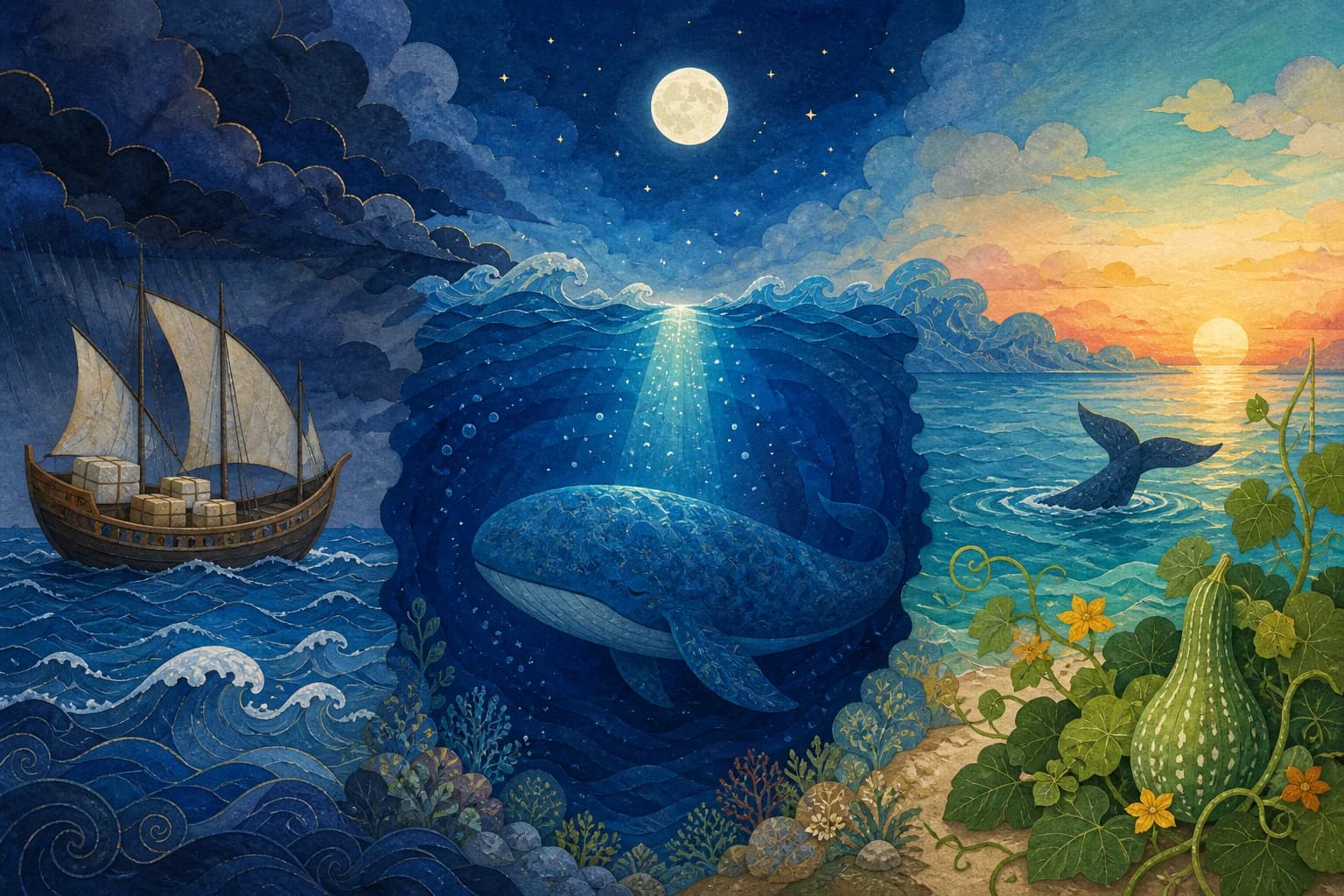
Yunus reaches a place with no obvious way out, calls honestly to God, and is brought back to the open shore.
As-Saffat 37:139–148 · Al-Anbiya 21:87–88
The journey narrowed
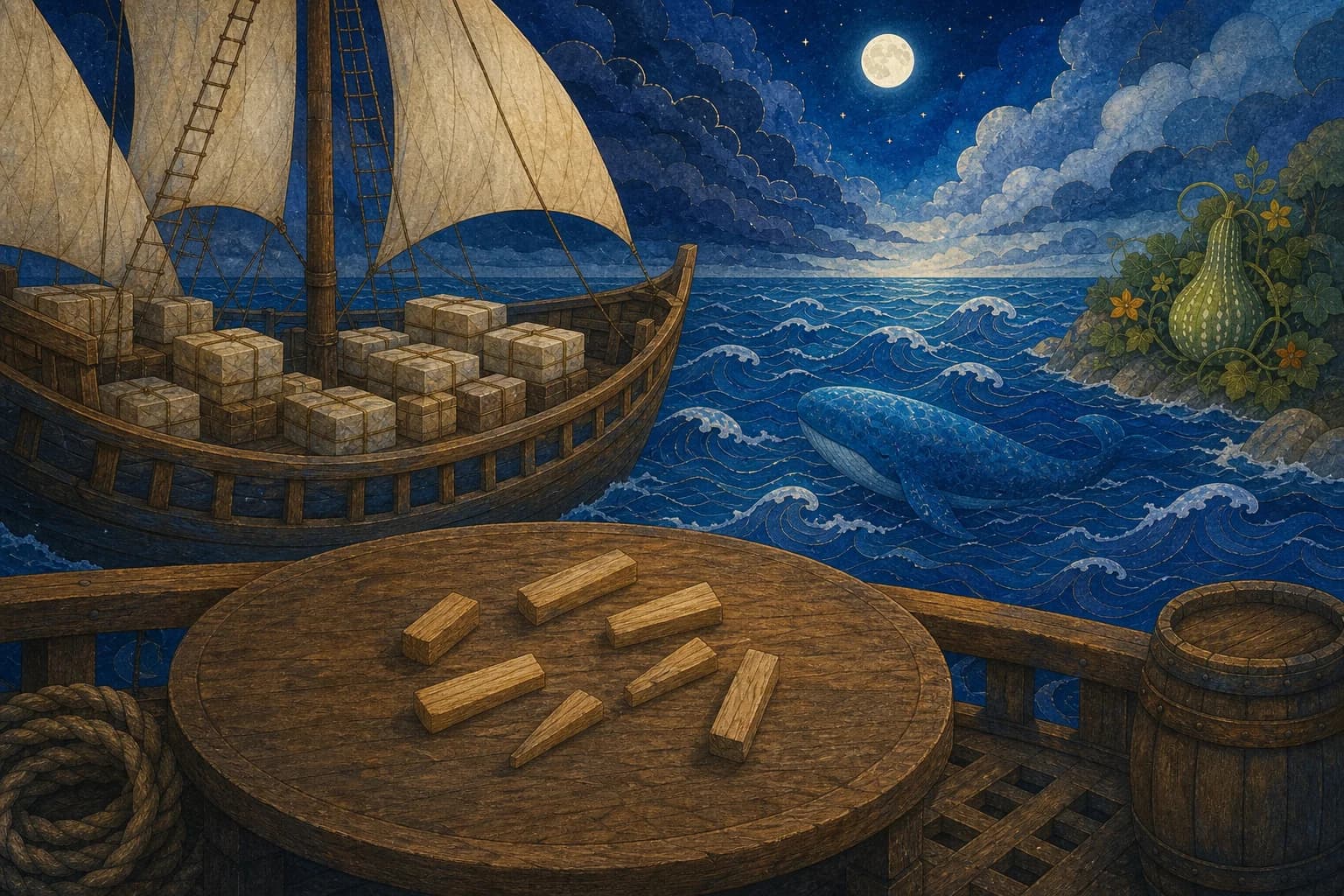
Yunus was one of God’s messengers. He left on a laden ship, lots were drawn, and a great fish swallowed him.
The ship is carrying heavy bundles. How does the dark sky change the way the left side feels?

Yunus called out honestly
Inside the darknesses, Yunus called to God. He praised God and admitted that he had done wrong.
Find the narrow path of light through the water. Why might the illustrator place it above the fish?

Distress opened into care
God brought Yunus onto the open shore while he was ill and caused a gourd vine to grow over him. Later, he returned to a people who believed.
Count the broad leaves. What kind of shelter can a plant make?
The prayer does not pretend nothing went wrong. It begins with who God is, then tells the truth about the self, and distress is answered.
For grown-upsThe verses each picture rests on, what the art adds, and a deeper idea for older readers.
1 The journey narrowed
وَإِنَّ يُونُسَ لَمِنَ ٱلْمُرْسَلِينَ
And indeed, Jonah was among the messengers.
As-Saaffaat · 37:139 · read in contextإِذْ أَبَقَ إِلَى ٱلْفُلْكِ ٱلْمَشْحُونِ
[Mention] when he ran away to the laden ship.
As-Saaffaat · 37:140 · read in contextفَسَاهَمَ فَكَانَ مِنَ ٱلْمُدْحَضِينَ
And he drew lots and was among the losers.
As-Saaffaat · 37:141 · read in contextفَٱلْتَقَمَهُ ٱلْحُوتُ وَهُوَ مُلِيمٌ
Then the fish swallowed him, while he was blameworthy.
As-Saaffaat · 37:142 · read in contextPicture note: The storm clouds are visual atmosphere. These cited verses name a laden ship and lots, but do not describe the weather.
Look deeper The verses tell the sequence with very few details: messenger, laden ship, lots, fish. A careful retelling should resist filling every silence with legend.
2 Yunus called out honestly
وَذَا ٱلنُّونِ إِذ ذَّهَبَ مُغَٰضِبًا فَظَنَّ أَن لَّن نَّقْدِرَ عَلَيْهِ فَنَادَىٰ فِى ٱلظُّلُمَٰتِ أَن لَّآ إِلَٰهَ إِلَّآ أَنتَ سُبْحَٰنَكَ إِنِّى كُنتُ مِنَ ٱلظَّٰلِمِينَ
And [mention] the man of the fish, when he went off in anger and thought that We would not decree [anything] upon him. And he called out within the darknesses, "There is no deity except You; exalted are You. Indeed, I have been of the wrongdoers."
Al-Anbiyaa · 21:87 · read in contextفَٱسْتَجَبْنَا لَهُۥ وَنَجَّيْنَٰهُ مِنَ ٱلْغَمِّ وَكَذَٰلِكَ نُۨجِى ٱلْمُؤْمِنِينَ
So We responded to him and saved him from the distress. And thus do We save the believers.
Al-Anbiyaa · 21:88 · read in contextPicture note: The verse names the darknesses and the words called out inside them. The shaft of moonlit water is the illustrator's; the Quran describes darkness here, not a light to see by.
Look deeper The prayer holds three movements together: there is no god but You; glory belongs to You; I was among the wrongdoers. Hope and responsibility are not opposites.
3 Distress opened into care
فَنَبَذْنَٰهُ بِٱلْعَرَآءِ وَهُوَ سَقِيمٌ
But We threw him onto the open shore while he was ill.
As-Saaffaat · 37:145 · read in contextوَأَنۢبَتْنَا عَلَيْهِ شَجَرَةً مِّن يَقْطِينٍ
And We caused to grow over him a gourd vine.
As-Saaffaat · 37:146 · read in contextوَأَرْسَلْنَٰهُ إِلَىٰ مِا۟ئَةِ أَلْفٍ أَوْ يَزِيدُونَ
And We sent him to [his people of] a hundred thousand or more.
As-Saaffaat · 37:147 · read in contextفَـَٔامَنُوا۟ فَمَتَّعْنَٰهُمْ إِلَىٰ حِينٍ
And they believed, so We gave them enjoyment [of life] for a time.
As-Saaffaat · 37:148 · read in contextPicture note: The fish returning to sea is an illustrative transition; the cited verses name the shore and gourd vine, not the fish’s next movement.
Look deeper Rescue is not drawn as instant triumph. The text first gives vulnerability, shore, and shade; recovery has a place in the story.