
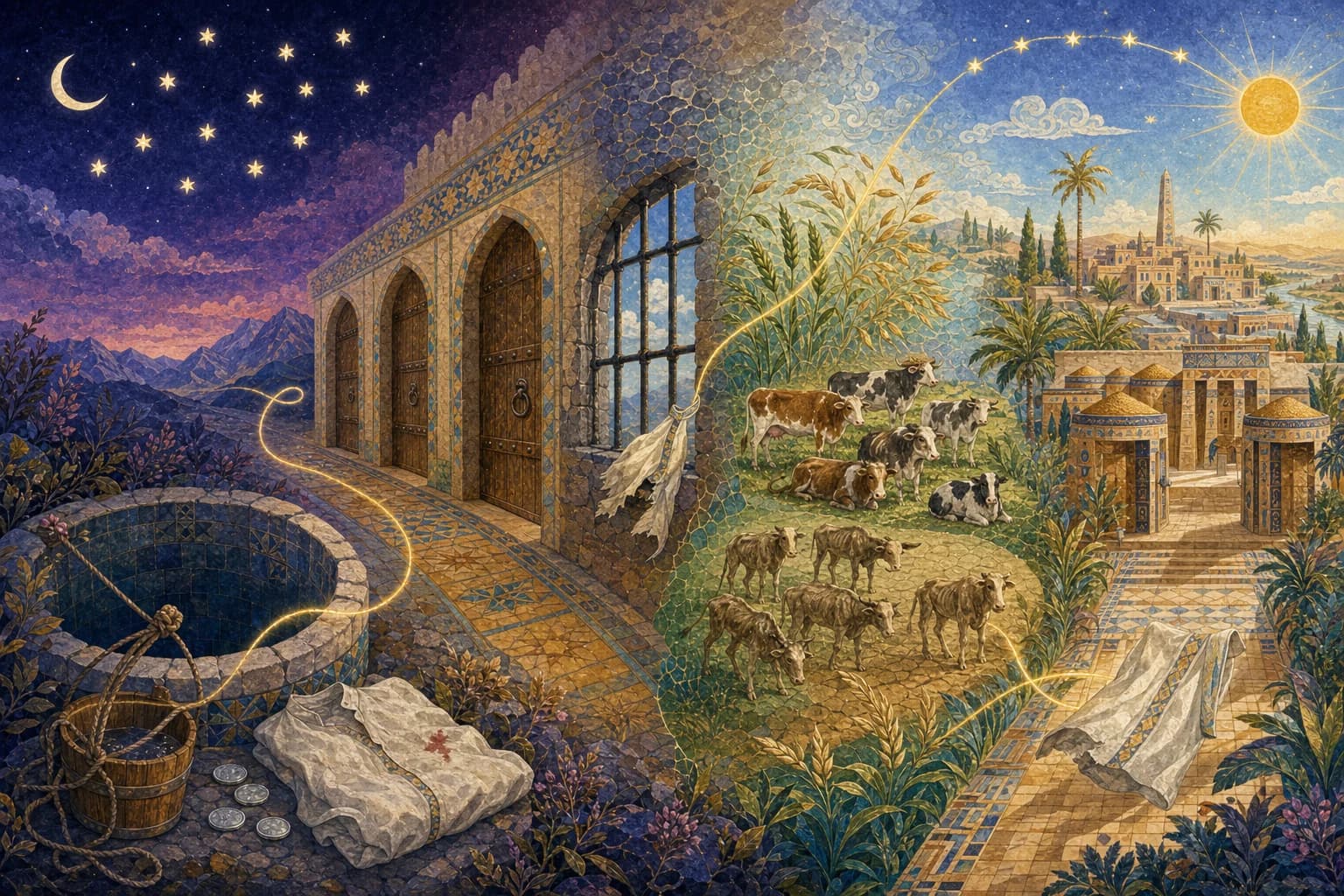
Yusuf and the Dream That Came True
يوسف
A boy dreams of eleven stars. His brothers put him down a well. Years later, the man in charge of Egypt's grain turns out to be someone they thought was gone.
Yusuf 12:4-100
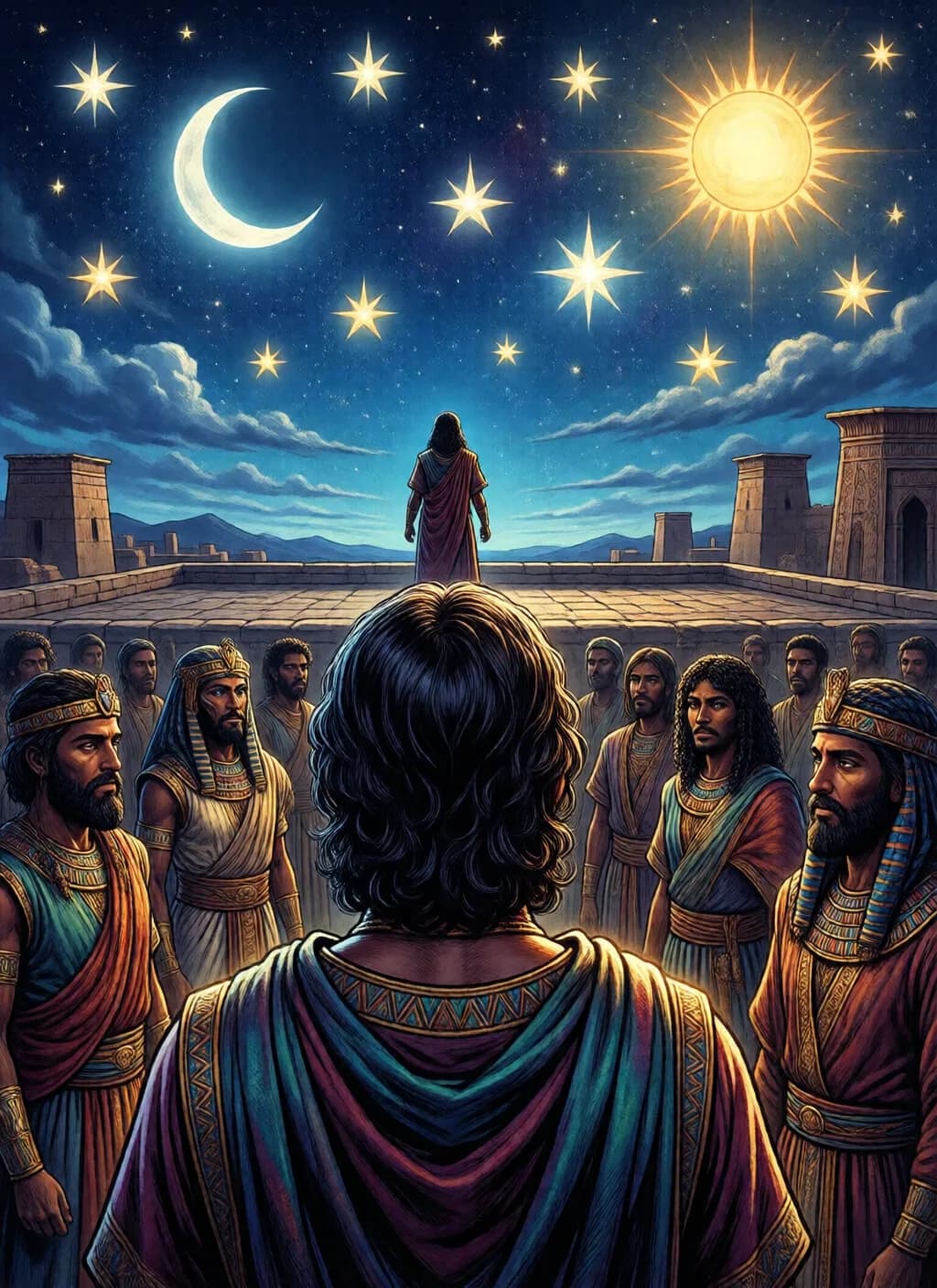
Eleven stars bowed down
Yusuf told his father about a dream. Eleven stars, and the sun, and the moon had bowed down to him. His father listened carefully. Then he said: keep this dream to yourself. Do not tell your brothers.
Count the stars. There should be eleven. Now find the sun and the moon.
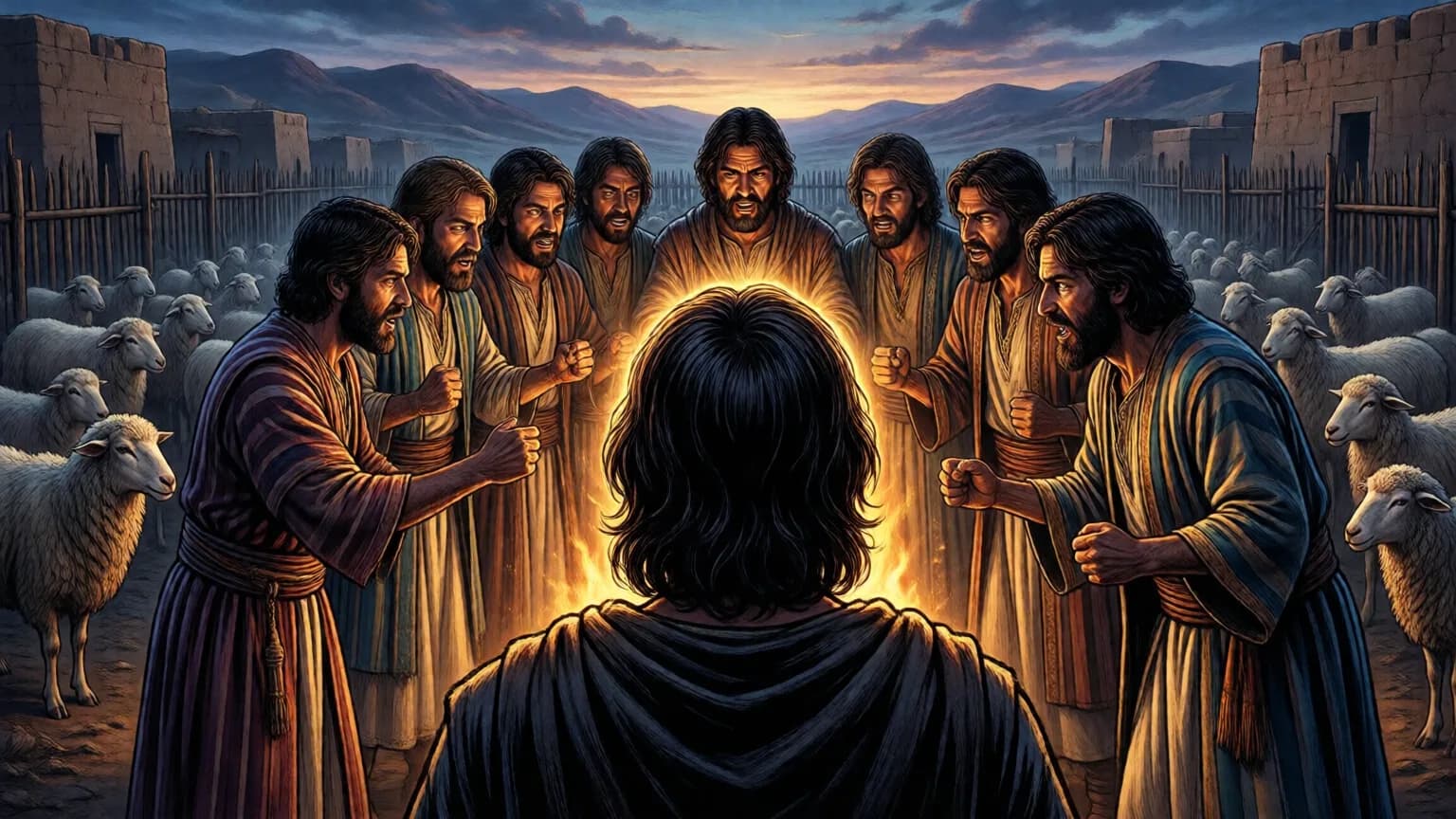
Ten brothers made a plan
His brothers were jealous. Our father loves Yusuf more than us, they said, and we are a whole group. One of them said: do not kill him. Put him down a well instead. Some traveller will pick him up.
Look at their faces. Can you find the one who is arguing against the others?
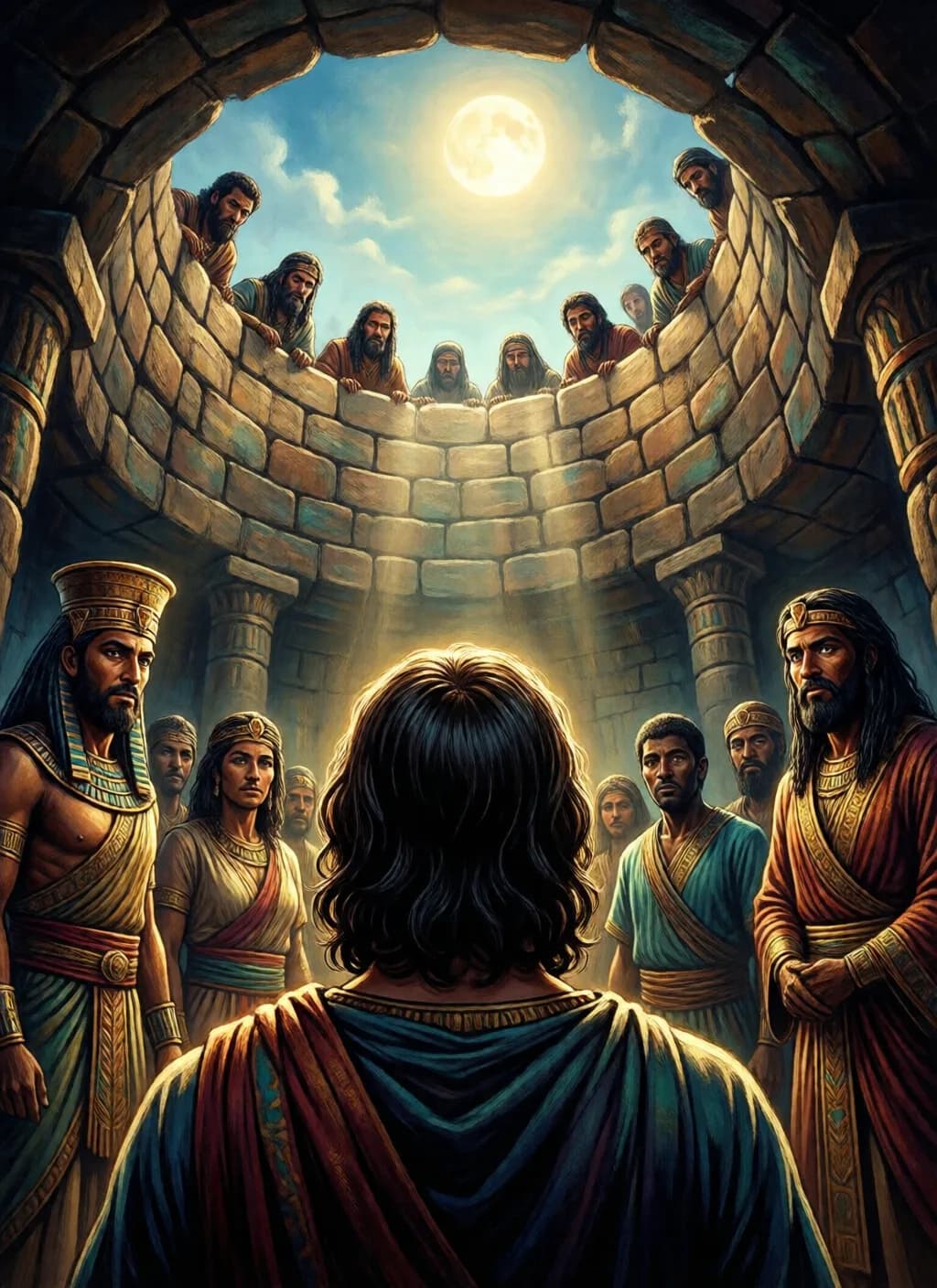
Down into the dark
They took him out and agreed together to put him into the dark of the well. And God let Yusuf know something the brothers could not hear: one day you will tell them exactly what they did today.
The picture is drawn from the bottom of the well, looking up. How far away does the sky look?
They came home crying
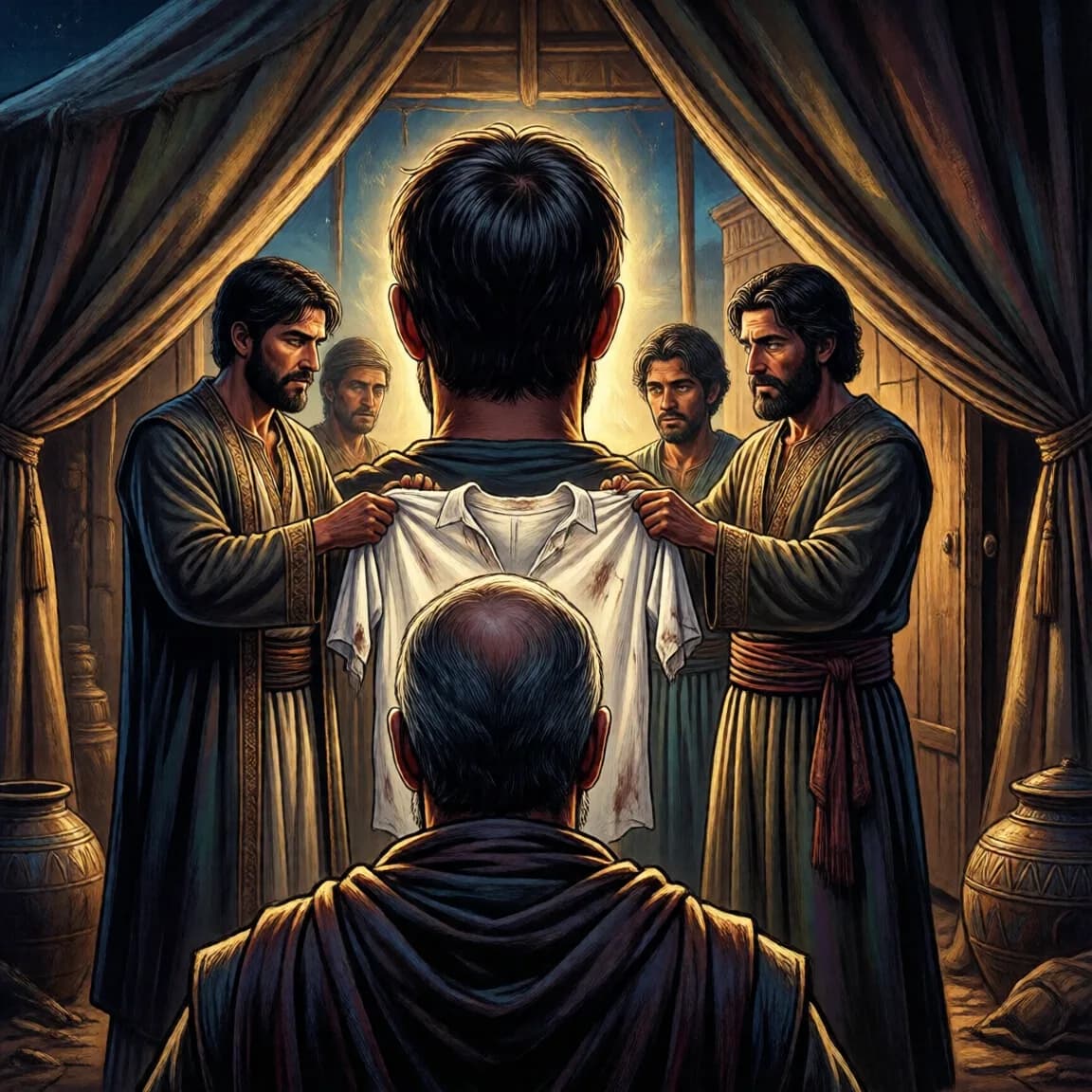
That evening the brothers came back to their father, crying. A wolf ate him, they said. They held out Yusuf's shirt with false blood on it. Their father did not believe them. He said: I will be beautifully patient.
Everyone in this picture is upset. Who do you think is actually telling the truth?
Good news, a boy
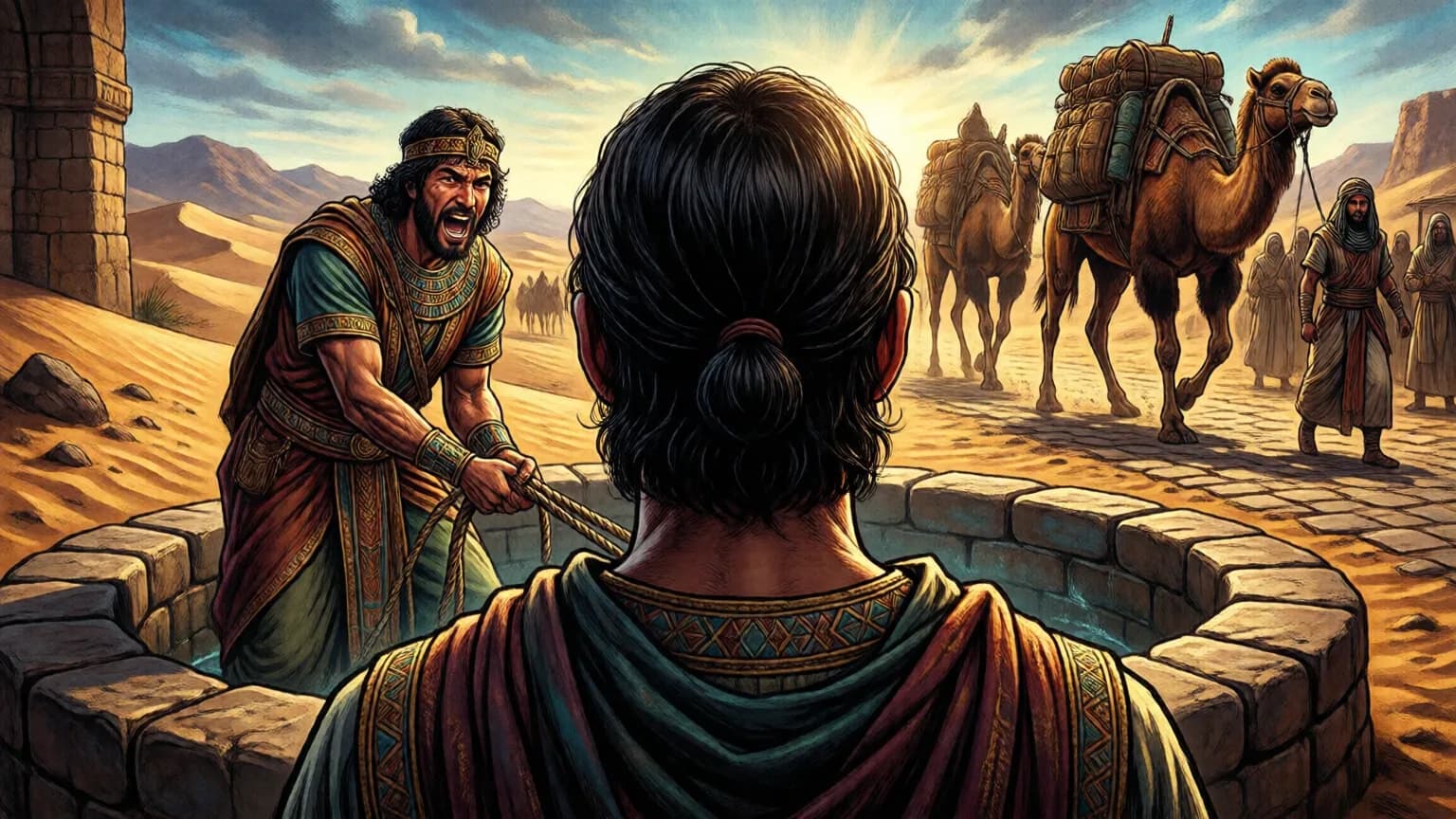
A caravan came by and sent their water carrier ahead. He let his bucket down into the well and shouted back: good news, a boy! They hid him with their goods, and sold him for a few small coins.
Follow the rope from the man's hands all the way down. What is at the other end?
A house with high walls
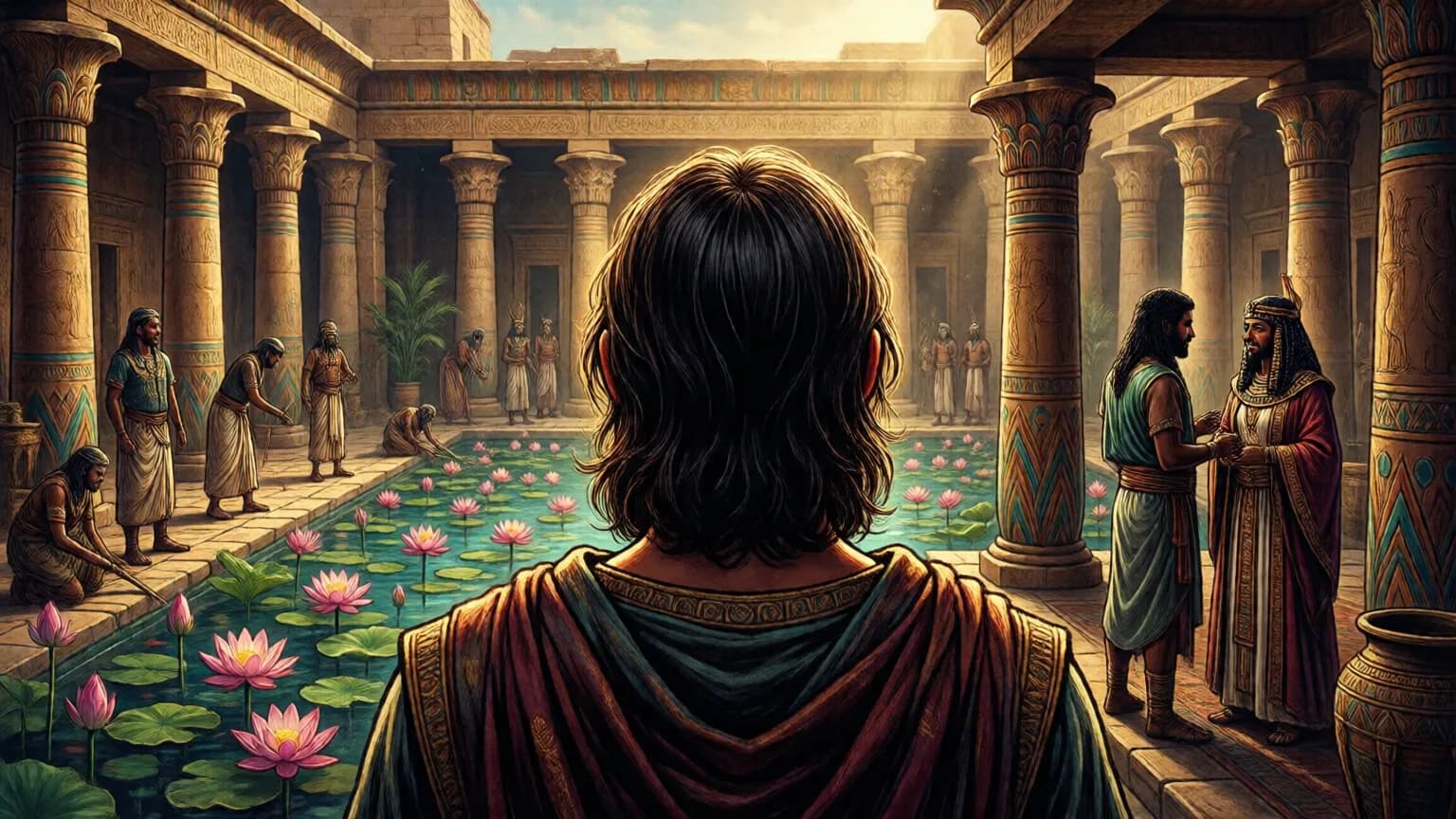
The man from Egypt who bought him told his wife: look after him well. Perhaps he will be useful to us, or we could take him as a son. So Yusuf grew up in that house, and God taught him how to understand things.
This house is much grander than the tents from before. What has changed for Yusuf?
The shirt torn from behind
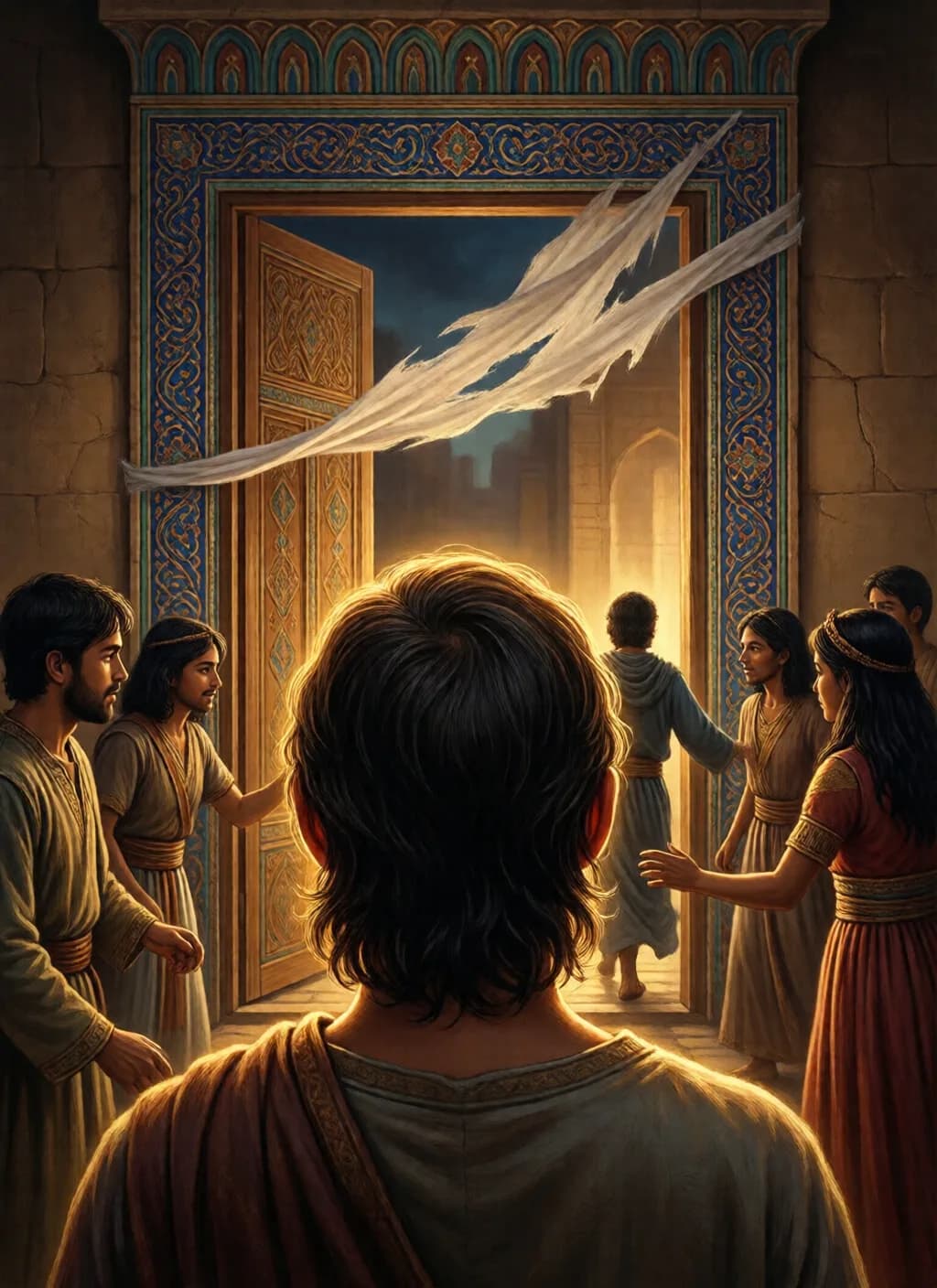
The woman of the house shut all the doors and called him to do something wrong. He refused and ran for the door. She caught his shirt and it tore from behind. Someone said: look at the shirt. Torn at the back means he was running away.
Which way is the torn cloth pointing? What does that tell you about which way he was moving?
They cut their own hands
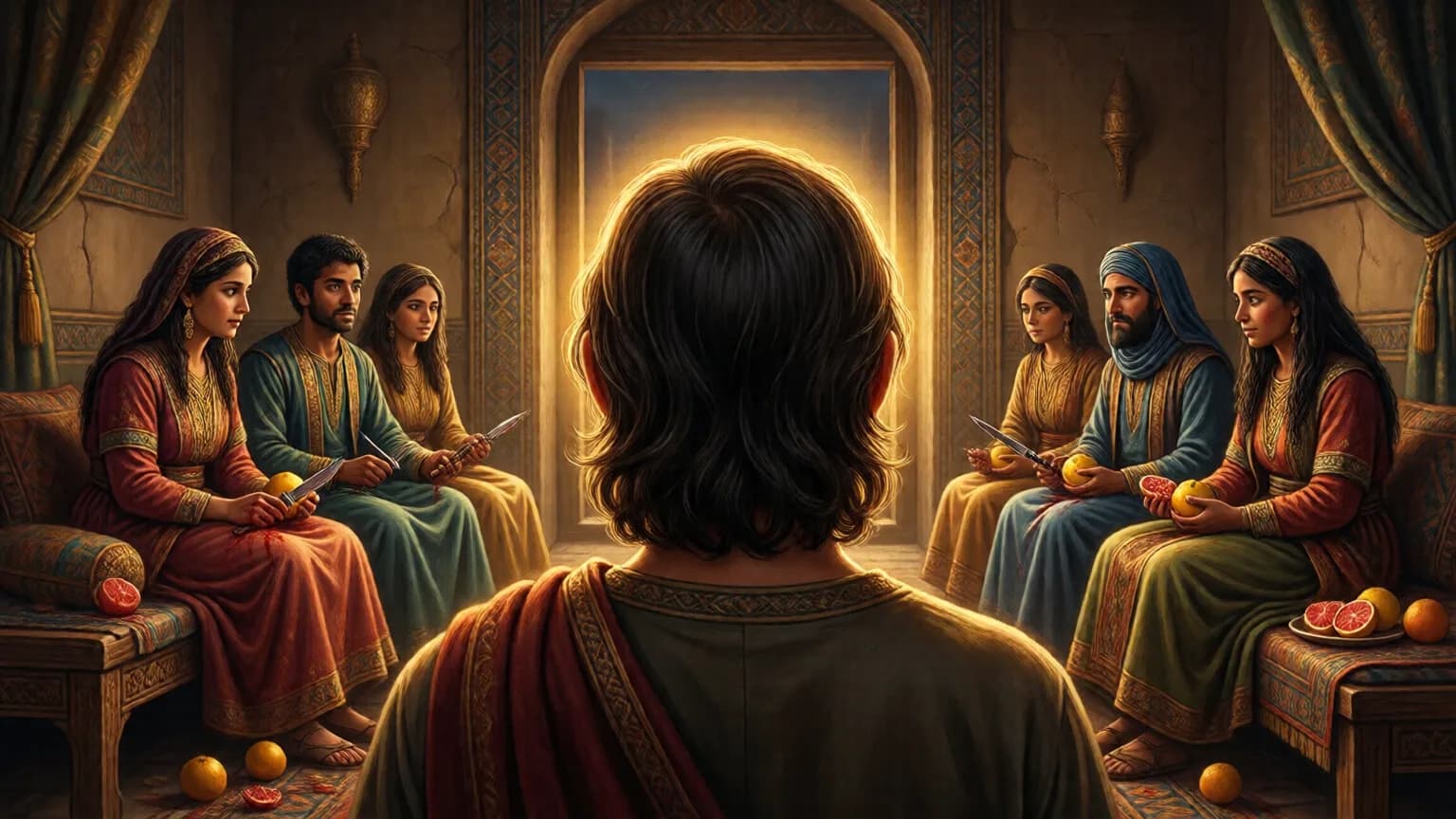
Women in the city gossiped about her. So she invited them all, gave each one a knife and some fruit, and then called Yusuf into the room. They were so astonished that they cut their own hands. She said: this is the one you blamed me about.
Every woman here is holding a knife and looking the same way. What do you think just walked in?
Two dreams in a cell
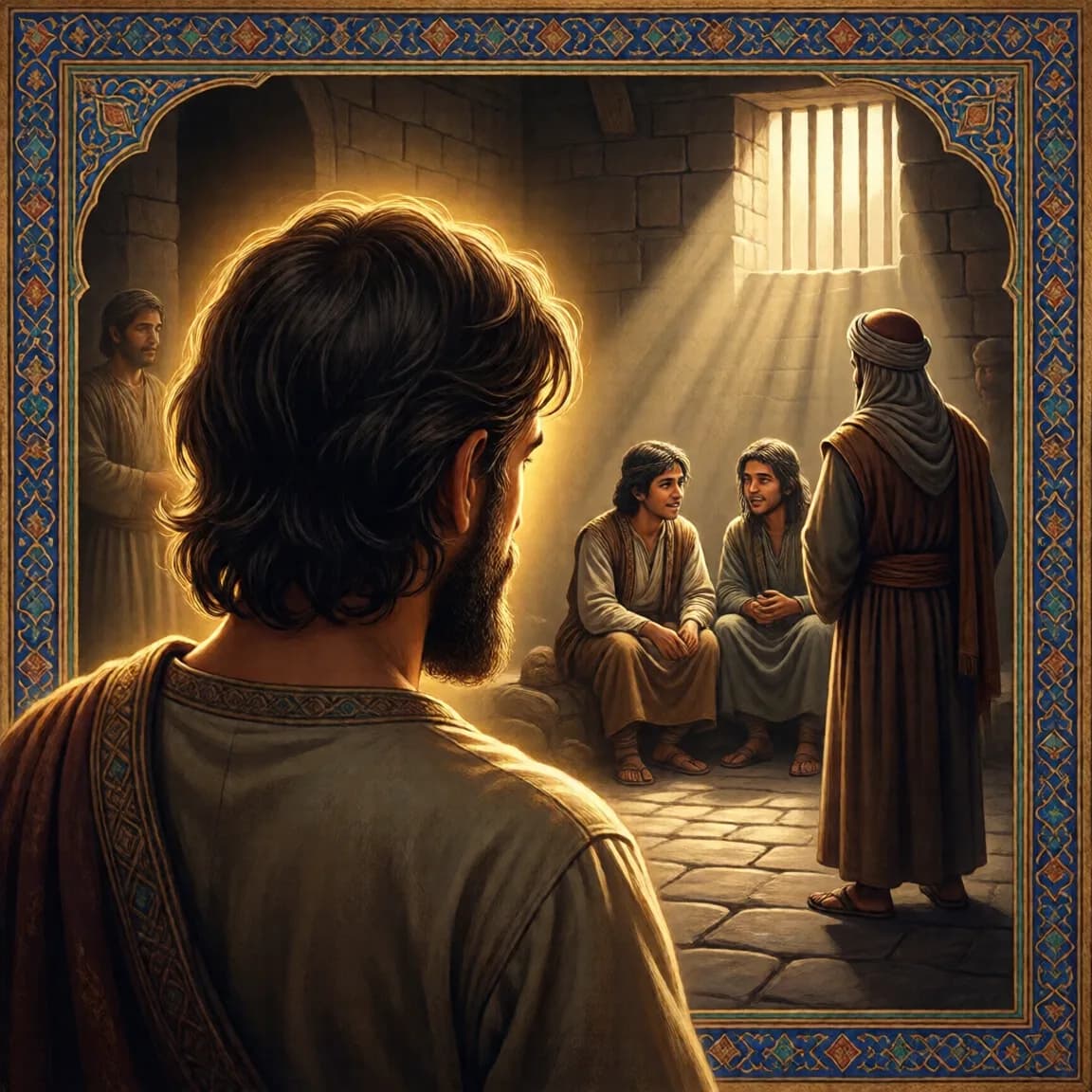
In prison, two young men each had a dream and asked Yusuf what they meant. He told them about God first. Then he explained: one of you will pour wine for his king again. Yusuf asked him to mention his name to his master. But he forgot.
Two men, two dreams. One of them is about to be set free. Can you guess which?
Seven fat cows, seven thin
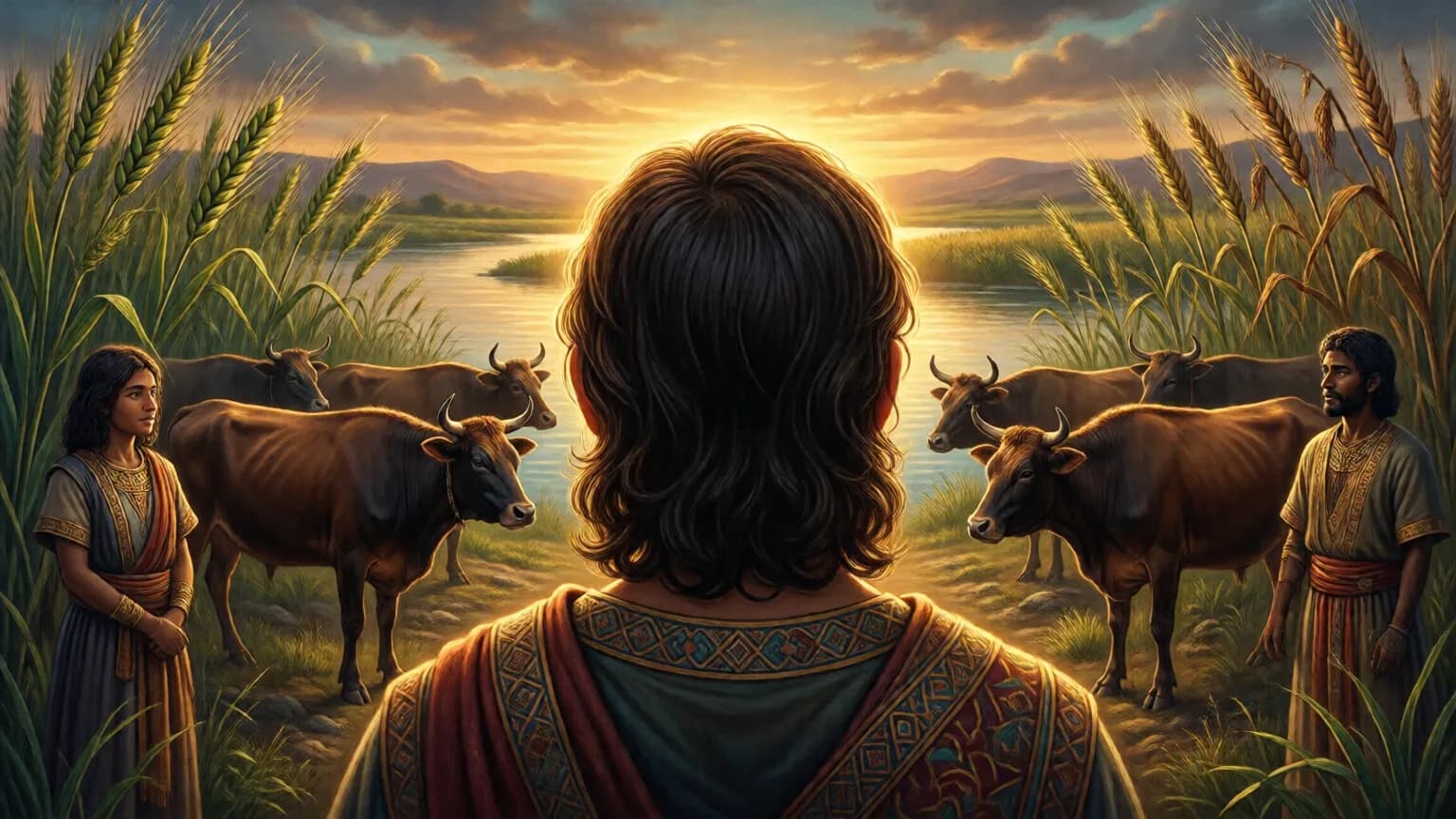
The king dreamed of seven fat cows eaten by seven thin ones, and seven green ears of grain beside seven dry ones. Nobody could explain it. Then the man from the prison remembered. Yusuf said: farm for seven years, and leave the grain in its ear. Hard years are coming.
Count the fat cows, then the thin ones. Then count the green ears and the dry ones. What number keeps coming back?
They did not know his face
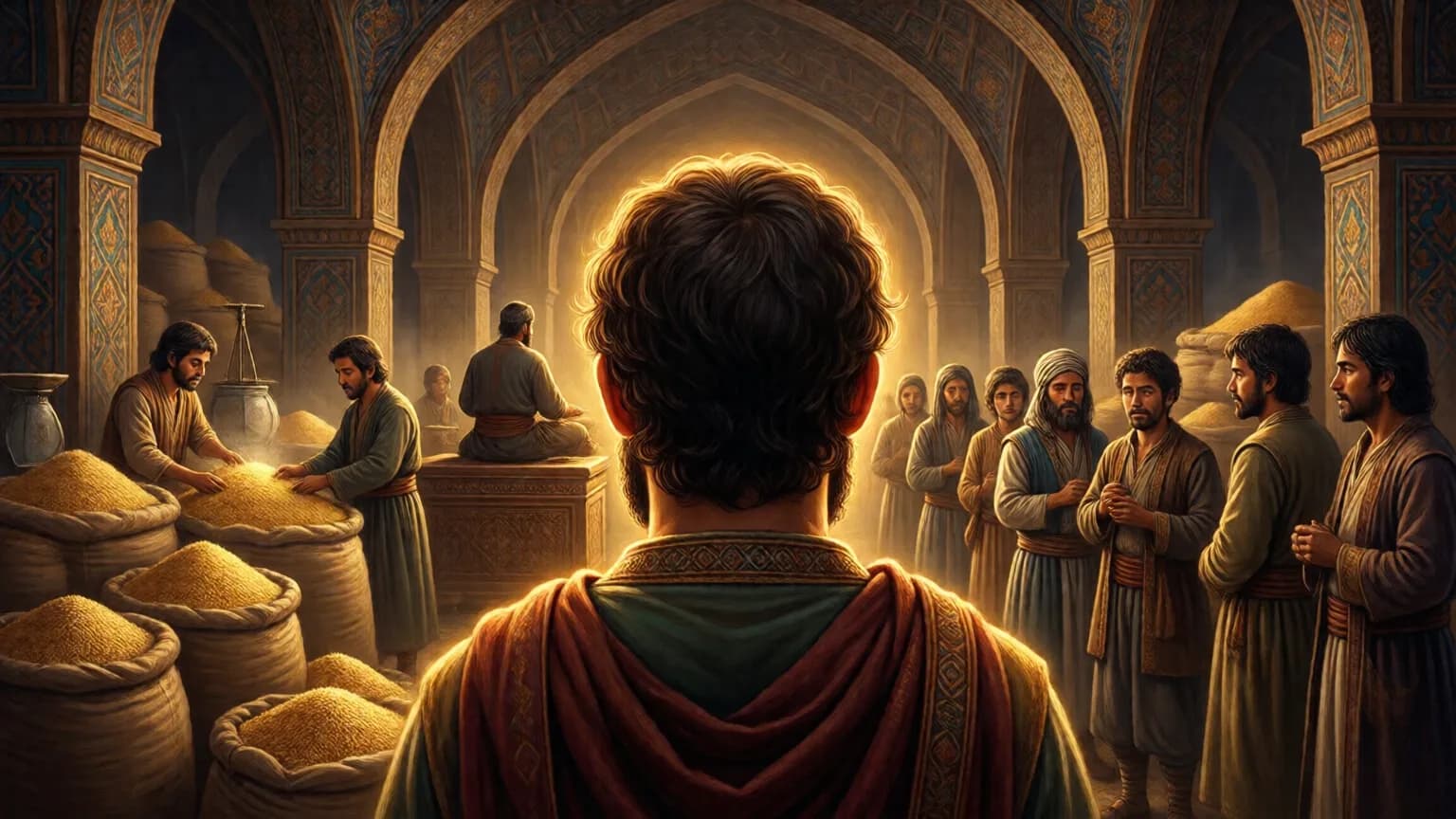
Yusuf said: put me in charge of the storehouses of the land. I know how to look after them. So he was given real power in Egypt. Years later his brothers came to buy grain, and they did not recognise the man they were talking to. He knew them straight away.
The brothers are here again. They are older now. Does anyone in the picture look surprised?
Something in the bag
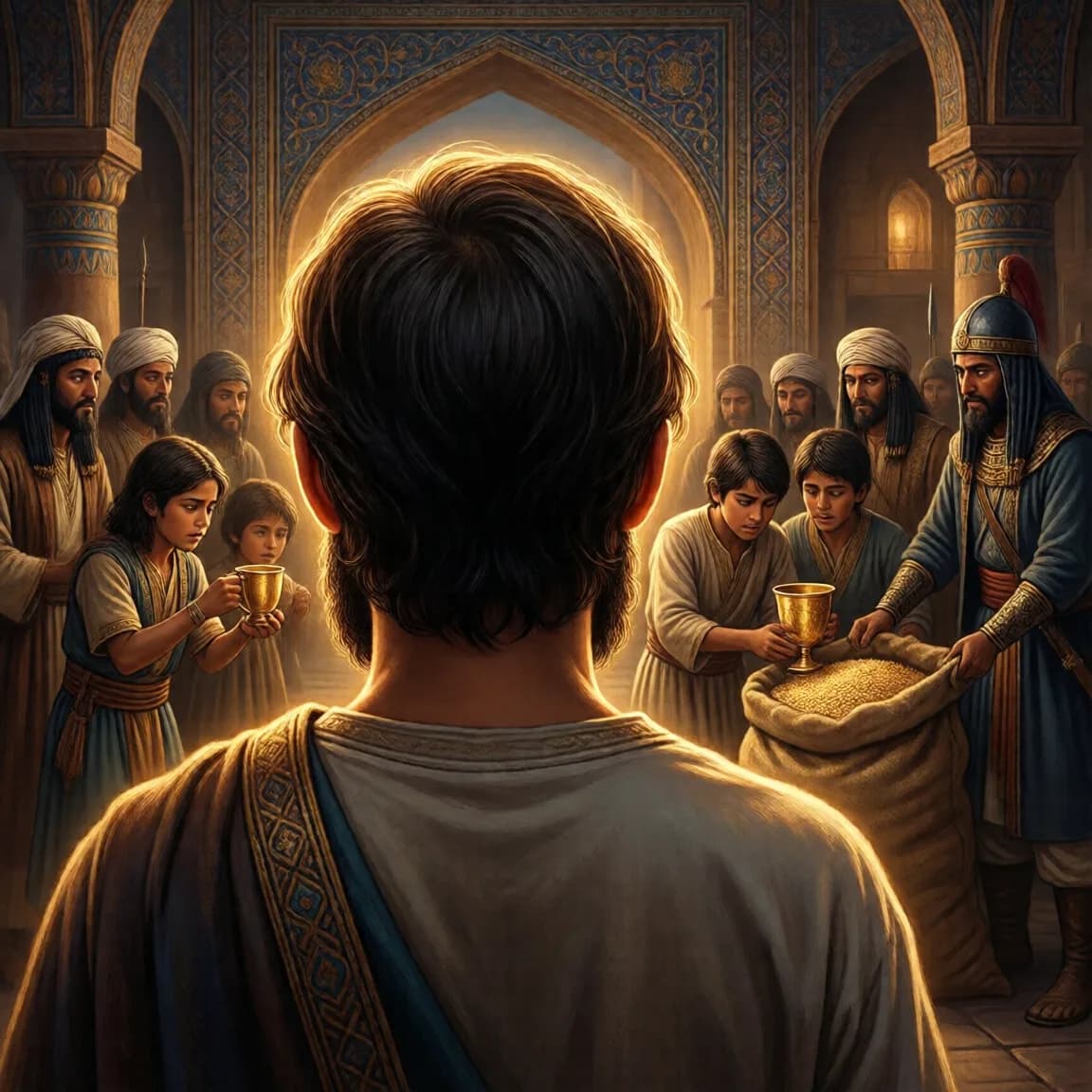
A king's drinking cup was found in his youngest brother's bag. If he stole, the brothers said, then a brother of his stole before him. Yusuf kept what he was feeling inside himself and did not say it out loud to them.
One brother is standing apart from the others. How do you think he is feeling?
A father who kept waiting
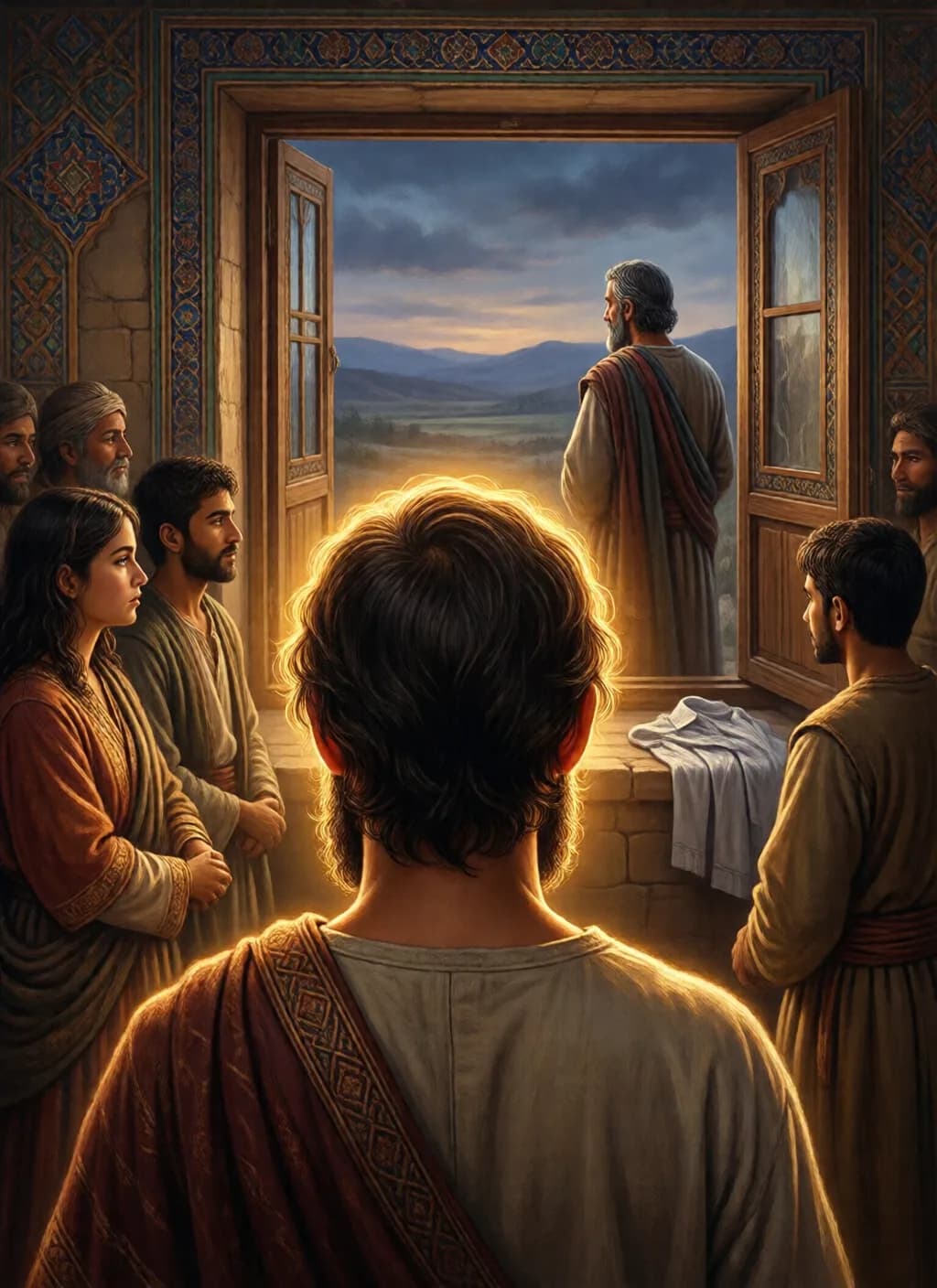
Far away, their father turned away from them and said: how deep my sorrow for Yusuf. His eyes went white from crying. They told him he would never stop. He said: I complain about my sadness only to God.
This is the same father from the very first picture. How much time do you think has passed?
I am Yusuf
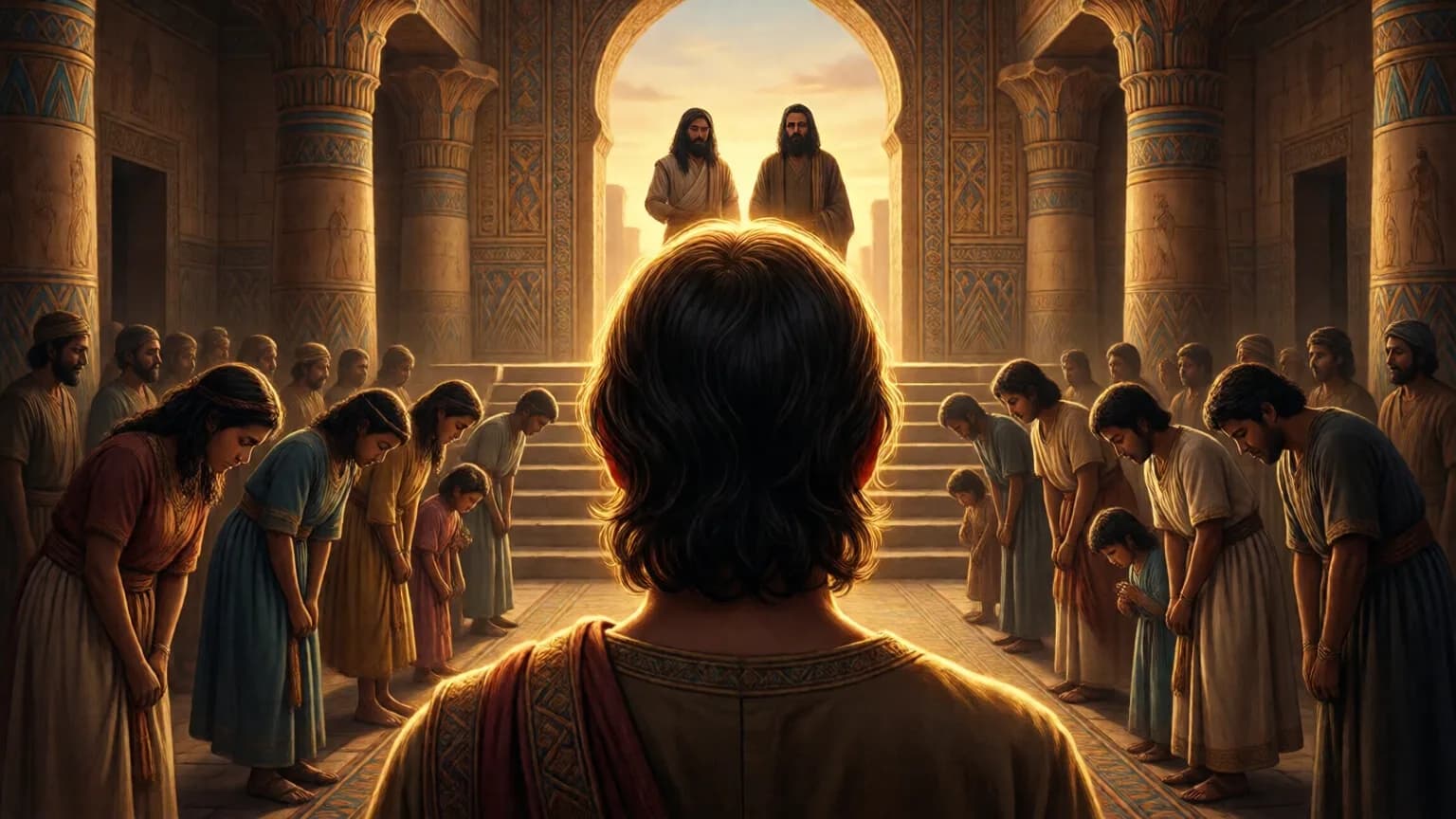
At last he told them: I am Yusuf, and this is my brother. They said: is it really you? He said: there is no blame on you today. Take my shirt and lay it over my father's face. When it arrived, his father could see again. And Yusuf said: this is what my dream meant, all those years ago.
Go back to the very first picture and count the stars again. Then count the people arriving here.
Yusuf never says the years were easy. When he finally has power over the people who hurt him, what he says is: no blame on you today.
For grown-upsThe verses each picture rests on, what the art adds, and a deeper idea for older readers.
1 Eleven stars bowed down
إِذْ قَالَ يُوسُفُ لِأَبِيهِ يَٰٓأَبَتِ إِنِّى رَأَيْتُ أَحَدَ عَشَرَ كَوْكَبًا وَٱلشَّمْسَ وَٱلْقَمَرَ رَأَيْتُهُمْ لِى سَٰجِدِينَ
[Of these stories mention] when Joseph said to his father, "O my father, indeed I have seen [in a dream] eleven stars and the sun and the moon; I saw them prostrating to me."
Yusuf · 12:4 · read in contextقَالَ يَٰبُنَىَّ لَا تَقْصُصْ رُءْيَاكَ عَلَىٰٓ إِخْوَتِكَ فَيَكِيدُوا۟ لَكَ كَيْدًا إِنَّ ٱلشَّيْطَٰنَ لِلْإِنسَٰنِ عَدُوٌّ مُّبِينٌ
He said, "O my son, do not relate your vision to your brothers or they will contrive against you a plan. Indeed Satan, to man, is a manifest enemy.
Yusuf · 12:5 · read in contextوَكَذَٰلِكَ يَجْتَبِيكَ رَبُّكَ وَيُعَلِّمُكَ مِن تَأْوِيلِ ٱلْأَحَادِيثِ وَيُتِمُّ نِعْمَتَهُۥ عَلَيْكَ وَعَلَىٰٓ ءَالِ يَعْقُوبَ كَمَآ أَتَمَّهَا عَلَىٰٓ أَبَوَيْكَ مِن قَبْلُ إِبْرَٰهِيمَ وَإِسْحَٰقَ إِنَّ رَبَّكَ عَلِيمٌ حَكِيمٌ
And thus will your Lord choose you and teach you the interpretation of narratives and complete His favor upon you and upon the family of Jacob, as He completed it upon your fathers before, Abraham and Isaac. Indeed, your Lord is Knowing and Wise."
Yusuf · 12:6 · read in contextPicture note: The verse names the eleven stars, the sun, the moon, and the warning not to tell the brothers. The rooftop and the night city are the illustrator's. Yusuf is seen only from behind: his face is never drawn.
Look deeper The sura shows us the ending before the hardship starts. Yaqub does not doubt the dream. He worries about what jealousy might do with it, so his first instinct is to protect his son rather than celebrate.
2 Ten brothers made a plan
إِذْ قَالُوا۟ لَيُوسُفُ وَأَخُوهُ أَحَبُّ إِلَىٰٓ أَبِينَا مِنَّا وَنَحْنُ عُصْبَةٌ إِنَّ أَبَانَا لَفِى ضَلَٰلٍ مُّبِينٍ
When they said, "Joseph and his brother are more beloved to our father than we, while we are a clan. Indeed, our father is in clear error.
Yusuf · 12:8 · read in contextٱقْتُلُوا۟ يُوسُفَ أَوِ ٱطْرَحُوهُ أَرْضًا يَخْلُ لَكُمْ وَجْهُ أَبِيكُمْ وَتَكُونُوا۟ مِنۢ بَعْدِهِۦ قَوْمًا صَٰلِحِينَ
Kill Joseph or cast him out to [another] land; the countenance of your father will [then] be only for you, and you will be after that a righteous people."
Yusuf · 12:9 · read in contextقَالَ قَآئِلٌ مِّنْهُمْ لَا تَقْتُلُوا۟ يُوسُفَ وَأَلْقُوهُ فِى غَيَٰبَتِ ٱلْجُبِّ يَلْتَقِطْهُ بَعْضُ ٱلسَّيَّارَةِ إِن كُنتُمْ فَٰعِلِينَ
Said a speaker among them, "Do not kill Joseph but throw him into the bottom of the well; some travelers will pick him up - if you would do [something]."
Yusuf · 12:10 · read in contextPicture note: The verse names the jealousy, the words they said, and the brother who proposed the well instead of killing. The sheep pens and the fire are the illustrator's.
Look deeper The sura does not hide that the plan was argued over. One brother pushes for something less terrible, and that smaller mercy is what makes the rest of the story possible.
3 Down into the dark
فَلَمَّا ذَهَبُوا۟ بِهِۦ وَأَجْمَعُوٓا۟ أَن يَجْعَلُوهُ فِى غَيَٰبَتِ ٱلْجُبِّ وَأَوْحَيْنَآ إِلَيْهِ لَتُنَبِّئَنَّهُم بِأَمْرِهِمْ هَٰذَا وَهُمْ لَا يَشْعُرُونَ
So when they took him [out] and agreed to put him into the bottom of the well... But We inspired to him, "You will surely inform them [someday] about this affair of theirs while they do not perceive [your identity]."
Yusuf · 12:15 · read in contextPicture note: The verse names the well, the agreement, and the promise given to Yusuf inside it. The upward view is the illustrator's way of putting the reader where Yusuf is without drawing him.
Look deeper The promise arrives at the lowest moment, not after it. Yusuf is told the ending while he is still falling, though he has no way yet to see how it could possibly happen.
4 They came home crying
وَجَآءُوٓ أَبَاهُمْ عِشَآءً يَبْكُونَ
And they came to their father at night, weeping.
Yusuf · 12:16 · read in contextقَالُوا۟ يَٰٓأَبَانَآ إِنَّا ذَهَبْنَا نَسْتَبِقُ وَتَرَكْنَا يُوسُفَ عِندَ مَتَٰعِنَا فَأَكَلَهُ ٱلذِّئْبُ وَمَآ أَنتَ بِمُؤْمِنٍ لَّنَا وَلَوْ كُنَّا صَٰدِقِينَ
They said, "O our father, indeed we went racing each other and left Joseph with our possessions, and a wolf ate him. But you would not believe us, even if we were truthful."
Yusuf · 12:17 · read in contextوَجَآءُو عَلَىٰ قَمِيصِهِۦ بِدَمٍ كَذِبٍ قَالَ بَلْ سَوَّلَتْ لَكُمْ أَنفُسُكُمْ أَمْرًا فَصَبْرٌ جَمِيلٌ وَٱللَّهُ ٱلْمُسْتَعَانُ عَلَىٰ مَا تَصِفُونَ
And they brought upon his shirt false blood. [Jacob] said, "Rather, your souls have enticed you to something, so patience is most fitting. And Allah is the one sought for help against that which you describe."
Yusuf · 12:18 · read in contextPicture note: The verse names the evening, the weeping, the wolf story, the shirt with false blood, and the answer of beautiful patience. The tent and lamp are the illustrator's. Yaqub is seen from behind and his face is never drawn.
Look deeper Yaqub answers a staged story with two things at once: he says plainly that it is not true, and he does not lose his composure. Beautiful patience is not pretending nothing happened.
5 Good news, a boy
وَجَآءَتْ سَيَّارَةٌ فَأَرْسَلُوا۟ وَارِدَهُمْ فَأَدْلَىٰ دَلْوَهُۥ قَالَ يَٰبُشْرَىٰ هَٰذَا غُلَٰمٌ وَأَسَرُّوهُ بِضَٰعَةً وَٱللَّهُ عَلِيمٌۢ بِمَا يَعْمَلُونَ
And there came a company of travelers; then they sent their water drawer, and he let down his bucket. He said, "Good news! Here is a boy." And they concealed him, [taking him] as merchandise; and Allah was knowing of what they did.
Yusuf · 12:19 · read in contextوَشَرَوْهُ بِثَمَنٍۭ بَخْسٍ دَرَٰهِمَ مَعْدُودَةٍ وَكَانُوا۟ فِيهِ مِنَ ٱلزَّٰهِدِينَ
And they sold him for a reduced price - a few dirhams - and they were, concerning him, of those content with little.
Yusuf · 12:20 · read in contextPicture note: The verse names the caravan, the water carrier, the bucket, the shout of good news, the hiding, and the few coins. The desert road and camels are the illustrator's.
Look deeper Two things happen in one moment: Yusuf is rescued and Yusuf is sold. The sura says they thought little of him. What people decide someone is worth is not the same as what they are worth.
6 A house with high walls
وَقَالَ ٱلَّذِى ٱشْتَرَىٰهُ مِن مِّصْرَ لِٱمْرَأَتِهِۦٓ أَكْرِمِى مَثْوَىٰهُ عَسَىٰٓ أَن يَنفَعَنَآ أَوْ نَتَّخِذَهُۥ وَلَدًا وَكَذَٰلِكَ مَكَّنَّا لِيُوسُفَ فِى ٱلْأَرْضِ وَلِنُعَلِّمَهُۥ مِن تَأْوِيلِ ٱلْأَحَادِيثِ وَٱللَّهُ غَالِبٌ عَلَىٰٓ أَمْرِهِۦ وَلَٰكِنَّ أَكْثَرَ ٱلنَّاسِ لَا يَعْلَمُونَ
And the one from Egypt who bought him said to his wife, "Make his residence comfortable. Perhaps he will benefit us, or we will adopt him as a son." And thus, We established Joseph in the land that We might teach him the interpretation of events. And Allah is predominant over His affair, but most of the people do not know.
Yusuf · 12:21 · read in contextوَلَمَّا بَلَغَ أَشُدَّهُۥٓ ءَاتَيْنَٰهُ حُكْمًا وَعِلْمًا وَكَذَٰلِكَ نَجْزِى ٱلْمُحْسِنِينَ
And when Joseph reached maturity, We gave him judgment and knowledge. And thus We reward the doers of good.
Yusuf · 12:22 · read in contextPicture note: The verse names the man of Egypt, what he told his wife, and the knowledge Yusuf was given. The courtyard, pool and columns are the illustrator's picture of a great house.
Look deeper The sura marks this as God establishing him in the land. The rescue does not look like a rescue from inside it: he is still someone who was bought.
7 The shirt torn from behind
وَرَٰوَدَتْهُ ٱلَّتِى هُوَ فِى بَيْتِهَا عَن نَّفْسِهِۦ وَغَلَّقَتِ ٱلْأَبْوَٰبَ وَقَالَتْ هَيْتَ لَكَ قَالَ مَعَاذَ ٱللَّهِ إِنَّهُۥ رَبِّىٓ أَحْسَنَ مَثْوَاىَ إِنَّهُۥ لَا يُفْلِحُ ٱلظَّٰلِمُونَ
And she, in whose house he was, sought to seduce him. She closed the doors and said, "Come, you." He said, "[I seek] the refuge of Allah. Indeed, he is my master, who has made good my residence. Indeed, wrongdoers will not succeed."
Yusuf · 12:23 · read in contextوَٱسْتَبَقَا ٱلْبَابَ وَقَدَّتْ قَمِيصَهُۥ مِن دُبُرٍ وَأَلْفَيَا سَيِّدَهَا لَدَا ٱلْبَابِ قَالَتْ مَا جَزَآءُ مَنْ أَرَادَ بِأَهْلِكَ سُوٓءًا إِلَّآ أَن يُسْجَنَ أَوْ عَذَابٌ أَلِيمٌ
And they both raced to the door, and she tore his shirt from the back, and they found her husband at the door. She said, "What is the recompense of one who intended evil for your wife but that he be imprisoned or a painful punishment?"
Yusuf · 12:25 · read in contextقَالَ هِىَ رَٰوَدَتْنِى عَن نَّفْسِى وَشَهِدَ شَاهِدٌ مِّنْ أَهْلِهَآ إِن كَانَ قَمِيصُهُۥ قُدَّ مِن قُبُلٍ فَصَدَقَتْ وَهُوَ مِنَ ٱلْكَٰذِبِينَ
[Joseph] said, "It was she who sought to seduce me." And a witness from her family testified. "If his shirt is torn from the front, then she has told the truth, and he is of the liars.
Yusuf · 12:26 · read in contextوَإِن كَانَ قَمِيصُهُۥ قُدَّ مِن دُبُرٍ فَكَذَبَتْ وَهُوَ مِنَ ٱلصَّٰدِقِينَ
But if his shirt is torn from the back, then she has lied, and he is of the truthful."
Yusuf · 12:27 · read in contextفَلَمَّا رَءَا قَمِيصَهُۥ قُدَّ مِن دُبُرٍ قَالَ إِنَّهُۥ مِن كَيْدِكُنَّ إِنَّ كَيْدَكُنَّ عَظِيمٌ
So when her husband saw his shirt torn from the back, he said, "Indeed, it is of the women's plan. Indeed, your plan is great.
Yusuf · 12:28 · read in contextPicture note: The verse names the shut doors, the refusal, the race for the door, the shirt torn from behind, and the reasoning about which way the tear pointed. Yusuf is seen from behind only and his face is never drawn.
Look deeper The sura settles a false accusation with physical evidence, and it settles it in Yusuf's favour. The wrong belongs to the person who applied the pressure, never to the person trying to get out of the room.
For the grown-up beside them This scene is about sexual pressure and a false accusation. The read-aloud layer keeps it age-aware. Open the source together when you are ready to talk about consent, power, and evidence.
8 They cut their own hands
وَقَالَ نِسْوَةٌ فِى ٱلْمَدِينَةِ ٱمْرَأَتُ ٱلْعَزِيزِ تُرَٰوِدُ فَتَىٰهَا عَن نَّفْسِهِۦ قَدْ شَغَفَهَا حُبًّا إِنَّا لَنَرَىٰهَا فِى ضَلَٰلٍ مُّبِينٍ
And women in the city said, "The wife of al-'Azeez is seeking to seduce her slave boy; he has impassioned her with love. Indeed, we see her [to be] in clear error."
Yusuf · 12:30 · read in contextفَلَمَّا سَمِعَتْ بِمَكْرِهِنَّ أَرْسَلَتْ إِلَيْهِنَّ وَأَعْتَدَتْ لَهُنَّ مُتَّكَـًٔا وَءَاتَتْ كُلَّ وَٰحِدَةٍ مِّنْهُنَّ سِكِّينًا وَقَالَتِ ٱخْرُجْ عَلَيْهِنَّ فَلَمَّا رَأَيْنَهُۥٓ أَكْبَرْنَهُۥ وَقَطَّعْنَ أَيْدِيَهُنَّ وَقُلْنَ حَٰشَ لِلَّهِ مَا هَٰذَا بَشَرًا إِنْ هَٰذَآ إِلَّا مَلَكٌ كَرِيمٌ
So when she heard of their scheming, she sent for them and prepared for them a banquet and gave each one of them a knife and said [to Joseph], "Come out before them." And when they saw him, they greatly admired him and cut their hands and said, "Perfect is Allah! This is not a man; this is none but a noble angel."
Yusuf · 12:31 · read in contextقَالَتْ فَذَٰلِكُنَّ ٱلَّذِى لُمْتُنَّنِى فِيهِ وَلَقَدْ رَٰوَدتُّهُۥ عَن نَّفْسِهِۦ فَٱسْتَعْصَمَ وَلَئِن لَّمْ يَفْعَلْ مَآ ءَامُرُهُۥ لَيُسْجَنَنَّ وَلَيَكُونًا مِّنَ ٱلصَّٰغِرِينَ
She said, "That is the one about whom you blamed me. And I certainly sought to seduce him, but he firmly refused; and if he will not do what I order him, he will surely be imprisoned and will be of those debased."
Yusuf · 12:32 · read in contextقَالَ رَبِّ ٱلسِّجْنُ أَحَبُّ إِلَىَّ مِمَّا يَدْعُونَنِىٓ إِلَيْهِ وَإِلَّا تَصْرِفْ عَنِّى كَيْدَهُنَّ أَصْبُ إِلَيْهِنَّ وَأَكُن مِّنَ ٱلْجَٰهِلِينَ
He said, "My Lord, prison is more to my liking than that to which they invite me. And if You do not avert from me their plan, I might incline toward them and [thus] be of the ignorant."
Yusuf · 12:33 · read in contextPicture note: The verse names the gossip, the invitation, the knives, the fruit, the cut hands, and what she said to them. The couches and the spilled fruit are the illustrator's. The figure they are all looking at is not drawn.
Look deeper It is a trap set to prove a point, and it works. The sura lets the room full of witnesses make her argument for her. Yusuf's answer is that he would rather be in prison than in that house.
9 Two dreams in a cell
وَدَخَلَ مَعَهُ ٱلسِّجْنَ فَتَيَانِ قَالَ أَحَدُهُمَآ إِنِّىٓ أَرَىٰنِىٓ أَعْصِرُ خَمْرًا وَقَالَ ٱلْءَاخَرُ إِنِّىٓ أَرَىٰنِىٓ أَحْمِلُ فَوْقَ رَأْسِى خُبْزًا تَأْكُلُ ٱلطَّيْرُ مِنْهُ نَبِّئْنَا بِتَأْوِيلِهِۦٓ إِنَّا نَرَىٰكَ مِنَ ٱلْمُحْسِنِينَ
And there entered the prison with him two young men. One of them said, "Indeed, I have seen myself [in a dream] pressing wine." The other said, "Indeed, I have seen myself carrying upon my head [some] bread, from which the birds were eating. Inform us of its interpretation; indeed, we see you to be of those who do good."
Yusuf · 12:36 · read in contextقَالَ لَا يَأْتِيكُمَا طَعَامٌ تُرْزَقَانِهِۦٓ إِلَّا نَبَّأْتُكُمَا بِتَأْوِيلِهِۦ قَبْلَ أَن يَأْتِيَكُمَا ذَٰلِكُمَا مِمَّا عَلَّمَنِى رَبِّىٓ إِنِّى تَرَكْتُ مِلَّةَ قَوْمٍ لَّا يُؤْمِنُونَ بِٱللَّهِ وَهُم بِٱلْءَاخِرَةِ هُمْ كَٰفِرُونَ
He said, "You will not receive food that is provided to you except that I will inform you of its interpretation before it comes to you. That is from what my Lord has taught me. Indeed, I have left the religion of a people who do not believe in Allah, and they, in the Hereafter, are disbelievers.
Yusuf · 12:37 · read in contextيَٰصَىٰحِبَىِ ٱلسِّجْنِ أَمَّآ أَحَدُكُمَا فَيَسْقِى رَبَّهُۥ خَمْرًا وَأَمَّا ٱلْءَاخَرُ فَيُصْلَبُ فَتَأْكُلُ ٱلطَّيْرُ مِن رَّأْسِهِۦ قُضِىَ ٱلْأَمْرُ ٱلَّذِى فِيهِ تَسْتَفْتِيَانِ
O two companions of prison, as for one of you, he will give drink to his master of wine; but as for the other, he will be crucified, and the birds will eat from his head. The matter has been decreed about which you both inquire."
Yusuf · 12:41 · read in contextوَقَالَ لِلَّذِى ظَنَّ أَنَّهُۥ نَاجٍ مِّنْهُمَا ٱذْكُرْنِى عِندَ رَبِّكَ فَأَنسَىٰهُ ٱلشَّيْطَٰنُ ذِكْرَ رَبِّهِۦ فَلَبِثَ فِى ٱلسِّجْنِ بِضْعَ سِنِينَ
And he said to the one whom he knew would go free, "Mention me before your master." But Satan made him forget the mention [to] his master, and Joseph remained in prison several years.
Yusuf · 12:42 · read in contextPicture note: The verse names the two companions, their dreams, the interpretation, the request to be mentioned, and the forgetting. The barred light and stone floor are the illustrator's. Yusuf is seen from behind only.
Look deeper Yusuf answers the question he was asked and adds the thing he most wants them to know. Then the one favour he asks for is forgotten, and years pass. The sura does not rush past that.
10 Seven fat cows, seven thin
وَقَالَ ٱلْمَلِكُ إِنِّىٓ أَرَىٰ سَبْعَ بَقَرَٰتٍ سِمَانٍ يَأْكُلُهُنَّ سَبْعٌ عِجَافٌ وَسَبْعَ سُنۢبُلَٰتٍ خُضْرٍ وَأُخَرَ يَابِسَٰتٍ يَٰٓأَيُّهَا ٱلْمَلَأُ أَفْتُونِى فِى رُءْيَٰىَ إِن كُنتُمْ لِلرُّءْيَا تَعْبُرُونَ
And [subsequently] the king said, "Indeed, I have seen [in a dream] seven fat cows being eaten by seven [that were] lean, and seven green spikes [of grain] and others [that were] dry. O eminent ones, explain to me my vision, if you should interpret visions."
Yusuf · 12:43 · read in contextيُوسُفُ أَيُّهَا ٱلصِّدِّيقُ أَفْتِنَا فِى سَبْعِ بَقَرَٰتٍ سِمَانٍ يَأْكُلُهُنَّ سَبْعٌ عِجَافٌ وَسَبْعِ سُنۢبُلَٰتٍ خُضْرٍ وَأُخَرَ يَابِسَٰتٍ لَّعَلِّىٓ أَرْجِعُ إِلَى ٱلنَّاسِ لَعَلَّهُمْ يَعْلَمُونَ
[He said], "Joseph, O man of truth, explain to us about seven fat cows eaten by seven [that were] lean, and seven green spikes [of grain] and others [that were] dry - that I may return to the people; perhaps they will know [about you]."
Yusuf · 12:46 · read in contextقَالَ تَزْرَعُونَ سَبْعَ سِنِينَ دَأَبًا فَمَا حَصَدتُّمْ فَذَرُوهُ فِى سُنۢبُلِهِۦٓ إِلَّا قَلِيلًا مِّمَّا تَأْكُلُونَ
[Joseph] said, "You will plant for seven years consecutively; and what you harvest leave in its spikes, except a little from which you will eat.
Yusuf · 12:47 · read in contextثُمَّ يَأْتِى مِنۢ بَعْدِ ذَٰلِكَ سَبْعٌ شِدَادٌ يَأْكُلْنَ مَا قَدَّمْتُمْ لَهُنَّ إِلَّا قَلِيلًا مِّمَّا تُحْصِنُونَ
Then will come after that seven difficult [years] which will consume what you saved for them, except a little from which you will store.
Yusuf · 12:48 · read in contextثُمَّ يَأْتِى مِنۢ بَعْدِ ذَٰلِكَ عَامٌ فِيهِ يُغَاثُ ٱلنَّاسُ وَفِيهِ يَعْصِرُونَ
Then will come after that a year in which the people will be given rain and in which they will press [olives and grapes]."
Yusuf · 12:49 · read in contextPicture note: The verse names the seven fat cows, the seven lean, the green and dry ears, and the plan to store grain in the ear. The riverbank is the illustrator's; the sura does not place the dream anywhere.
Look deeper Yusuf does not only read the dream, he gives a plan: store the surplus in the ear so it keeps. The sura treats good administration as part of the answer, not separate from it.
11 They did not know his face
قَالَ ٱجْعَلْنِى عَلَىٰ خَزَآئِنِ ٱلْأَرْضِ إِنِّى حَفِيظٌ عَلِيمٌ
[Joseph] said, "Appoint me over the storehouses of the land. Indeed, I will be a knowing guardian."
Yusuf · 12:55 · read in contextوَكَذَٰلِكَ مَكَّنَّا لِيُوسُفَ فِى ٱلْأَرْضِ يَتَبَوَّأُ مِنْهَا حَيْثُ يَشَآءُ نُصِيبُ بِرَحْمَتِنَا مَن نَّشَآءُ وَلَا نُضِيعُ أَجْرَ ٱلْمُحْسِنِينَ
And thus We established Joseph in the land to settle therein wherever he willed. We touch with Our mercy whom We will, and We do not allow to be lost the reward of those who do good.
Yusuf · 12:56 · read in contextوَجَآءَ إِخْوَةُ يُوسُفَ فَدَخَلُوا۟ عَلَيْهِ فَعَرَفَهُمْ وَهُمْ لَهُۥ مُنكِرُونَ
And the brothers of Joseph came [seeking food], and they entered upon him; and he recognized them, but he was to them unknown.
Yusuf · 12:58 · read in contextوَلَمَّا جَهَّزَهُم بِجَهَازِهِمْ قَالَ ٱئْتُونِى بِأَخٍ لَّكُم مِّنْ أَبِيكُمْ أَلَا تَرَوْنَ أَنِّىٓ أُوفِى ٱلْكَيْلَ وَأَنَا۠ خَيْرُ ٱلْمُنزِلِينَ
And when he had furnished them with their supplies, he said, "Bring me a brother of yours from your father. Do not you see that I give full measure and that I am the best of accommodators?
Yusuf · 12:59 · read in contextPicture note: The verse names the request for the storehouses, the authority given, the brothers arriving, and that they did not know him while he knew them. The granary interior is the illustrator's. Yusuf is seen from behind on the dais.
Look deeper The dream from the first page is quietly coming true, and the people it is coming true about cannot see it. The sura lets the reader hold that knowledge while the characters do not.
12 Something in the bag
فَلَمَّا جَهَّزَهُم بِجَهَازِهِمْ جَعَلَ ٱلسِّقَايَةَ فِى رَحْلِ أَخِيهِ ثُمَّ أَذَّنَ مُؤَذِّنٌ أَيَّتُهَا ٱلْعِيرُ إِنَّكُمْ لَسَٰرِقُونَ
So when he had furnished them with their supplies, he put the [gold measuring] bowl into the bag of his brother. Then an announcer called out, "O caravan, indeed you are thieves."
Yusuf · 12:70 · read in contextفَبَدَأَ بِأَوْعِيَتِهِمْ قَبْلَ وِعَآءِ أَخِيهِ ثُمَّ ٱسْتَخْرَجَهَا مِن وِعَآءِ أَخِيهِ كَذَٰلِكَ كِدْنَا لِيُوسُفَ مَا كَانَ لِيَأْخُذَ أَخَاهُ فِى دِينِ ٱلْمَلِكِ إِلَّآ أَن يَشَآءَ ٱللَّهُ نَرْفَعُ دَرَجَٰتٍ مَّن نَّشَآءُ وَفَوْقَ كُلِّ ذِى عِلْمٍ عَلِيمٌ
So he began [the search] with their bags before the bag of his brother; then he extracted it from the bag of his brother. Thus did We plan for Joseph. He could not have taken his brother within the religion of the king except that Allah willed. We raise in degrees whom We will, but over every possessor of knowledge is one [more] knowing.
Yusuf · 12:76 · read in contextقَالُوٓا۟ إِن يَسْرِقْ فَقَدْ سَرَقَ أَخٌ لَّهُۥ مِن قَبْلُ فَأَسَرَّهَا يُوسُفُ فِى نَفْسِهِۦ وَلَمْ يُبْدِهَا لَهُمْ قَالَ أَنتُمْ شَرٌّ مَّكَانًا وَٱللَّهُ أَعْلَمُ بِمَا تَصِفُونَ
They said, "If he steals - a brother of his has stolen before." But Joseph kept it within himself and did not reveal it to them. He said, "You are worse in position, and Allah is most knowing of what you describe."
Yusuf · 12:77 · read in contextPicture note: The verse names the cup, the bag it was found in, what the brothers said, and that Yusuf kept his reply inside himself. The courtyard and the guards are the illustrator's.
Look deeper The brothers reach for the old story about Yusuf without knowing he is standing in front of them. The sura says he kept it within himself, which is a strange and human detail to include.
13 A father who kept waiting
وَتَوَلَّىٰ عَنْهُمْ وَقَالَ يَٰٓأَسَفَىٰ عَلَىٰ يُوسُفَ وَٱبْيَضَّتْ عَيْنَاهُ مِنَ ٱلْحُزْنِ فَهُوَ كَظِيمٌ
And he turned away from them and said, "Oh, my sorrow over Joseph," and his eyes became white from grief, for he was [of that] a suppressor.
Yusuf · 12:84 · read in contextقَالُوا۟ تَٱللَّهِ تَفْتَؤُا۟ تَذْكُرُ يُوسُفَ حَتَّىٰ تَكُونَ حَرَضًا أَوْ تَكُونَ مِنَ ٱلْهَٰلِكِينَ
They said, "By Allah, you will not cease remembering Joseph until you become fatally ill or become of those who perish."
Yusuf · 12:85 · read in contextقَالَ إِنَّمَآ أَشْكُوا۟ بَثِّى وَحُزْنِىٓ إِلَى ٱللَّهِ وَأَعْلَمُ مِنَ ٱللَّهِ مَا لَا تَعْلَمُونَ
He said, "I only complain of my suffering and my grief to Allah, and I know from Allah that which you do not know.
Yusuf · 12:86 · read in contextPicture note: The verse names the turning away, the words about sorrow, the eyes whitened from grief, and the complaint made only to God. The window and the folded shirt are the illustrator's. Yaqub is seen from behind and his face is never drawn.
Look deeper The sura does not tidy grief away. It lasts years, it costs him his sight, and he refuses to take it to anyone except God. That refusal is not the same as being fine.
14 I am Yusuf
قَالَ هَلْ عَلِمْتُم مَّا فَعَلْتُم بِيُوسُفَ وَأَخِيهِ إِذْ أَنتُمْ جَٰهِلُونَ
He said, "Do you know what you did with Joseph and his brother when you were ignorant?"
Yusuf · 12:89 · read in contextقَالُوٓا۟ أَءِنَّكَ لَأَنتَ يُوسُفُ قَالَ أَنَا۠ يُوسُفُ وَهَٰذَآ أَخِى قَدْ مَنَّ ٱللَّهُ عَلَيْنَآ إِنَّهُۥ مَن يَتَّقِ وَيَصْبِرْ فَإِنَّ ٱللَّهَ لَا يُضِيعُ أَجْرَ ٱلْمُحْسِنِينَ
They said, "Are you indeed Joseph?" He said "I am Joseph, and this is my brother. Allah has certainly favored us. Indeed, he who fears Allah and is patient, then indeed, Allah does not allow to be lost the reward of those who do good."
Yusuf · 12:90 · read in contextقَالَ لَا تَثْرِيبَ عَلَيْكُمُ ٱلْيَوْمَ يَغْفِرُ ٱللَّهُ لَكُمْ وَهُوَ أَرْحَمُ ٱلرَّٰحِمِينَ
He said, "No blame will there be upon you today. Allah will forgive you; and He is the most merciful of the merciful."
Yusuf · 12:92 · read in contextٱذْهَبُوا۟ بِقَمِيصِى هَٰذَا فَأَلْقُوهُ عَلَىٰ وَجْهِ أَبِى يَأْتِ بَصِيرًا وَأْتُونِى بِأَهْلِكُمْ أَجْمَعِينَ
Take this, my shirt, and cast it over the face of my father; he will become seeing. And bring me your family, all together."
Yusuf · 12:93 · read in contextفَلَمَّآ أَن جَآءَ ٱلْبَشِيرُ أَلْقَىٰهُ عَلَىٰ وَجْهِهِۦ فَٱرْتَدَّ بَصِيرًا قَالَ أَلَمْ أَقُل لَّكُمْ إِنِّىٓ أَعْلَمُ مِنَ ٱللَّهِ مَا لَا تَعْلَمُونَ
And when the bearer of good tidings arrived, he cast it over his face, and he returned [once again] seeing. He said, "Did I not tell you that I know from Allah that which you do not know?"
Yusuf · 12:96 · read in contextوَرَفَعَ أَبَوَيْهِ عَلَى ٱلْعَرْشِ وَخَرُّوا۟ لَهُۥ سُجَّدًا وَقَالَ يَٰٓأَبَتِ هَٰذَا تَأْوِيلُ رُءْيَٰىَ مِن قَبْلُ قَدْ جَعَلَهَا رَبِّى حَقًّا وَقَدْ أَحْسَنَ بِىٓ إِذْ أَخْرَجَنِى مِنَ ٱلسِّجْنِ وَجَآءَ بِكُم مِّنَ ٱلْبَدْوِ مِنۢ بَعْدِ أَن نَّزَغَ ٱلشَّيْطَٰنُ بَيْنِى وَبَيْنَ إِخْوَتِىٓ إِنَّ رَبِّى لَطِيفٌ لِّمَا يَشَآءُ إِنَّهُۥ هُوَ ٱلْعَلِيمُ ٱلْحَكِيمُ
And he raised his parents upon the throne, and they bowed to him in prostration. And he said, "O my father, this is the explanation of my vision of before. My Lord has made it reality. And He was certainly good to me when He took me out of prison and brought you [here] from bedouin life after Satan had induced [estrangement] between me and my brothers. Indeed, my Lord is Subtle in what He wills. Indeed, it is He who is the Knowing, the Wise.
Yusuf · 12:100 · read in contextPicture note: The verse names the words I am Yusuf, the question back, the forgiveness, the shirt laid on his father's face, the sight returning, and Yusuf naming the dream fulfilled. The hall is the illustrator's. Yusuf and Yaqub are seen from behind and their faces are never drawn.
Look deeper He has complete power over them and uses it to close the case. The sura ends the story where it began, with the dream, and lets Yusuf name it himself.