
The Ant Who Spoke Up
النملة
A tiny ant notices danger, protects her community, and is heard by a king.
An-Naml 27:18–19

Danger was getting close
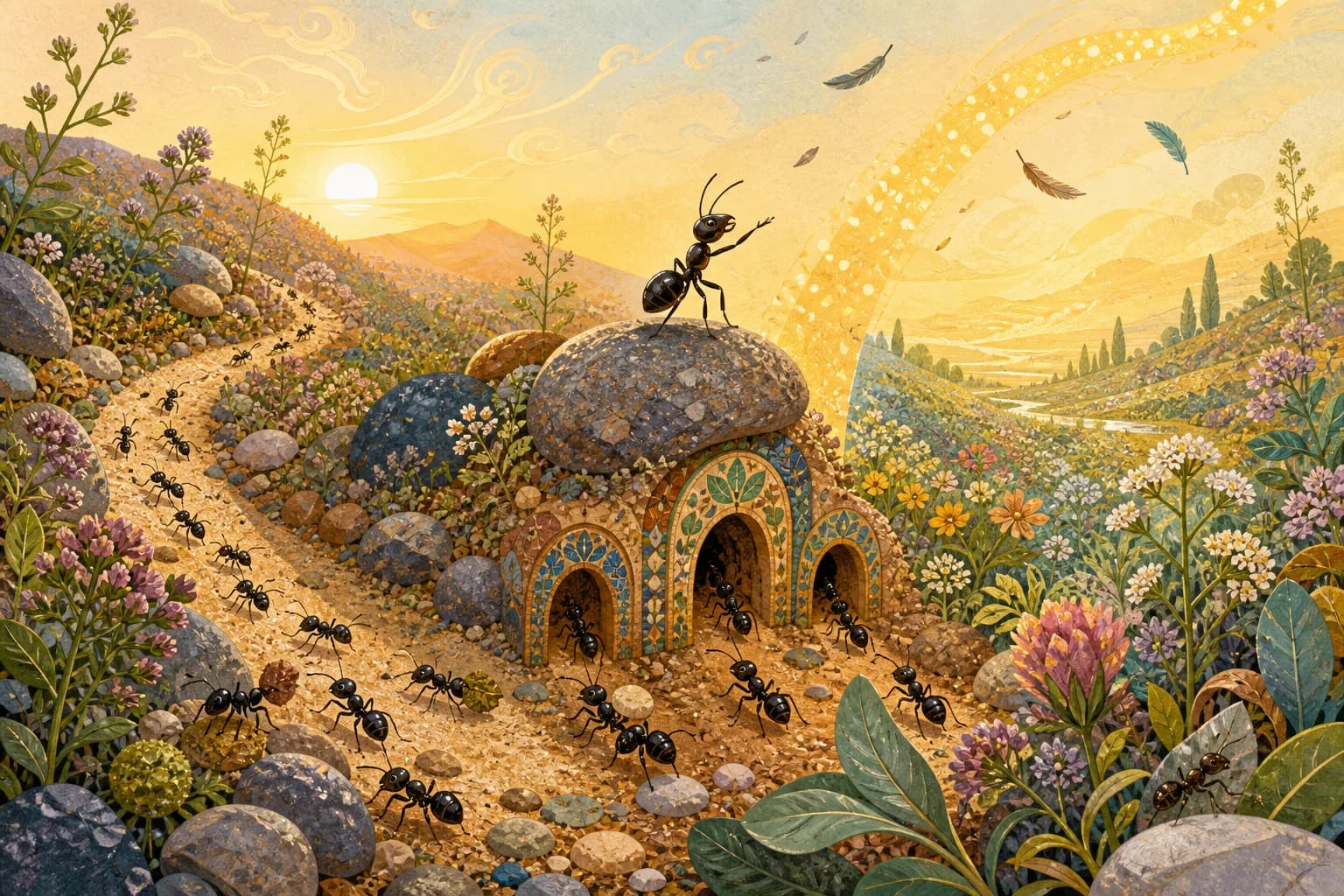
Sulayman and his forces reached a valley where ants lived. They might step on the ants without even noticing them.
Find the smallest ant in the picture. What can she see that the others have not noticed yet?
One ant spoke for everyone
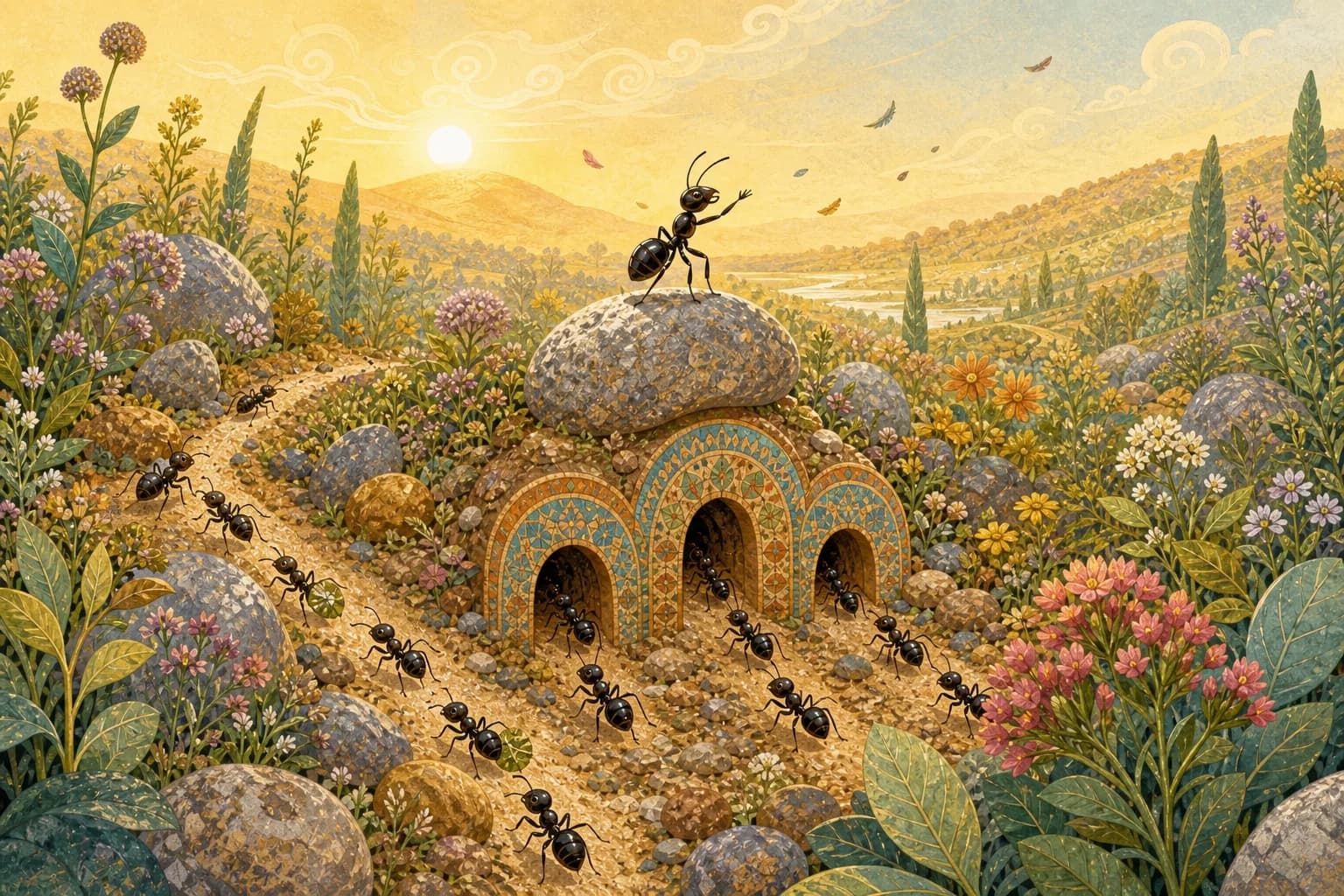
An ant called to the others: go into your homes, so you are not crushed. Her warning was quick, clear, and made to protect.
Trace the ant paths with your finger. Which doorway would you choose?

The king listened
Sulayman understood her. He smiled, then asked God to help him be grateful and do what is right.
The bright arc has no person inside it. It is the illustrator’s way of making gratitude feel visible.
The ant’s warning saves others. Sulayman’s first response to understanding her is not pride: it is gratitude.
For grown-upsThe verses each picture rests on, what the art adds, and a deeper idea for older readers.
1 Danger was getting close
حَتَّىٰٓ إِذَآ أَتَوْا۟ عَلَىٰ وَادِ ٱلنَّمْلِ قَالَتْ نَمْلَةٌ يَٰٓأَيُّهَا ٱلنَّمْلُ ٱدْخُلُوا۟ مَسَٰكِنَكُمْ لَا يَحْطِمَنَّكُمْ سُلَيْمَٰنُ وَجُنُودُهُۥ وَهُمْ لَا يَشْعُرُونَ
Until, when they came upon the valley of the ants, an ant said, "O ants, enter your dwellings that you not be crushed by Solomon and his soldiers while they perceive not."
An-Naml · 27:18 · read in contextPicture note: The flowers, feathers, and distant dust are visual atmosphere; the verse names the valley, the ants, Sulayman, and his forces.
Look deeper The verse does not accuse the approaching forces of cruelty. It says the harm could happen without their awareness, a sharp lesson about the effects power can have without intending them.
2 One ant spoke for everyone
حَتَّىٰٓ إِذَآ أَتَوْا۟ عَلَىٰ وَادِ ٱلنَّمْلِ قَالَتْ نَمْلَةٌ يَٰٓأَيُّهَا ٱلنَّمْلُ ٱدْخُلُوا۟ مَسَٰكِنَكُمْ لَا يَحْطِمَنَّكُمْ سُلَيْمَٰنُ وَجُنُودُهُۥ وَهُمْ لَا يَشْعُرُونَ
Until, when they came upon the valley of the ants, an ant said, "O ants, enter your dwellings that you not be crushed by Solomon and his soldiers while they perceive not."
An-Naml · 27:18 · read in contextPicture note: The verse names the ant, her call, the other ants, and the dwellings they enter. The patterned mound and the mosaic doorways are the illustrator's; the Quran does not describe what an ant's home looks like.
Look deeper The ant speaks to the whole community and gives an action, a reason, and a charitable explanation: the danger may come from people who do not realise what they are doing.
3 The king listened
فَتَبَسَّمَ ضَاحِكًا مِّن قَوْلِهَا وَقَالَ رَبِّ أَوْزِعْنِىٓ أَنْ أَشْكُرَ نِعْمَتَكَ ٱلَّتِىٓ أَنْعَمْتَ عَلَىَّ وَعَلَىٰ وَٰلِدَىَّ وَأَنْ أَعْمَلَ صَٰلِحًا تَرْضَىٰهُ وَأَدْخِلْنِى بِرَحْمَتِكَ فِى عِبَادِكَ ٱلصَّٰلِحِينَ
So [Solomon] smiled, amused at her speech, and said, "My Lord, enable me to be grateful for Your favor which You have bestowed upon me and upon my parents and to do righteousness of which You approve. And admit me by Your mercy into [the ranks of] Your righteous servants."
An-Naml · 27:19 · read in contextPicture note: The verse names the smile and the prayer that followed it, not a light in the sky. The golden arc is the illustrator's way of drawing gratitude without drawing a person, and the flowers are atmosphere.
Look deeper The scene turns scale upside down: the smallest speaker changes the attention of the most powerful listener. Understanding becomes a reason to thank God, not to show off.